
THE CLOTH
PARIS with founder Robert Young
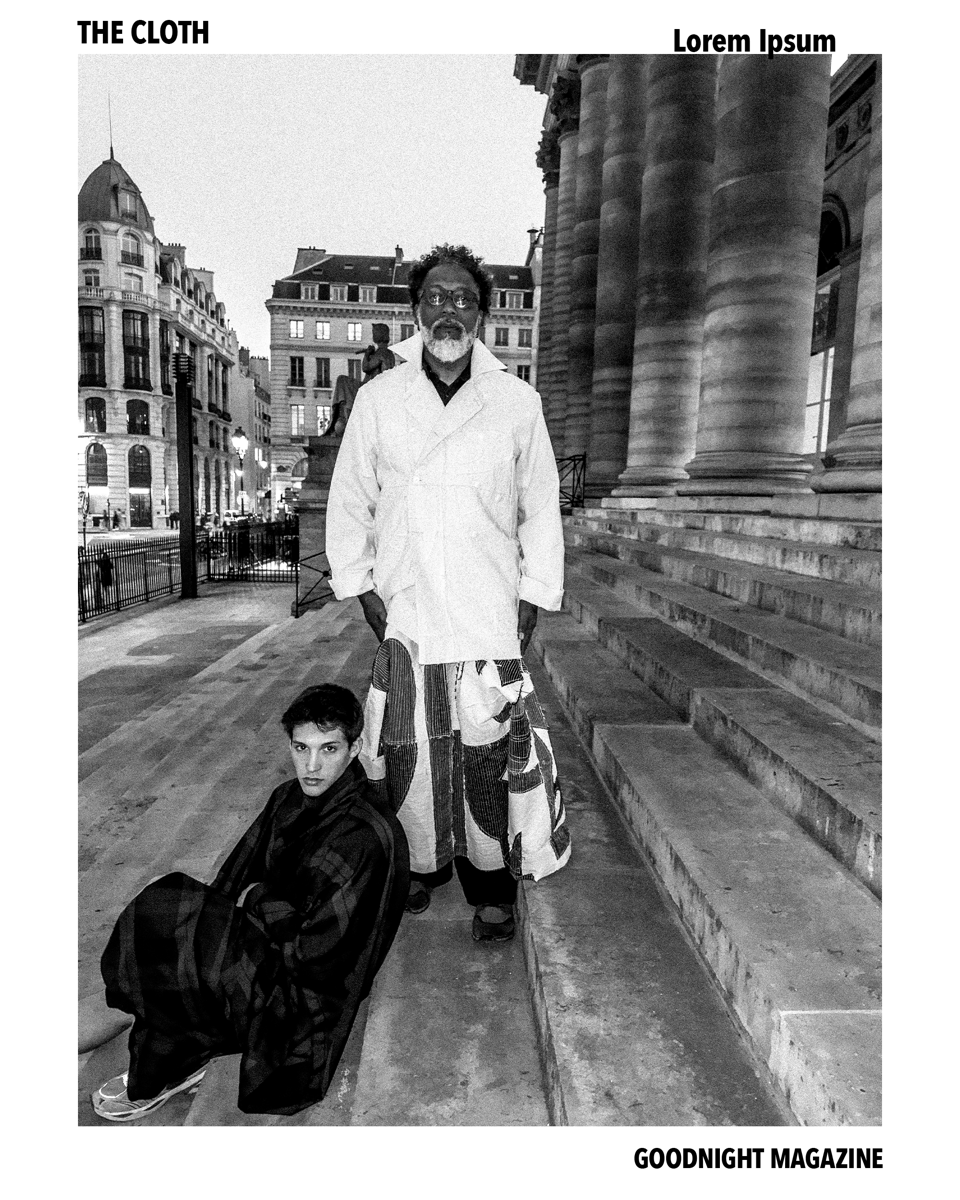
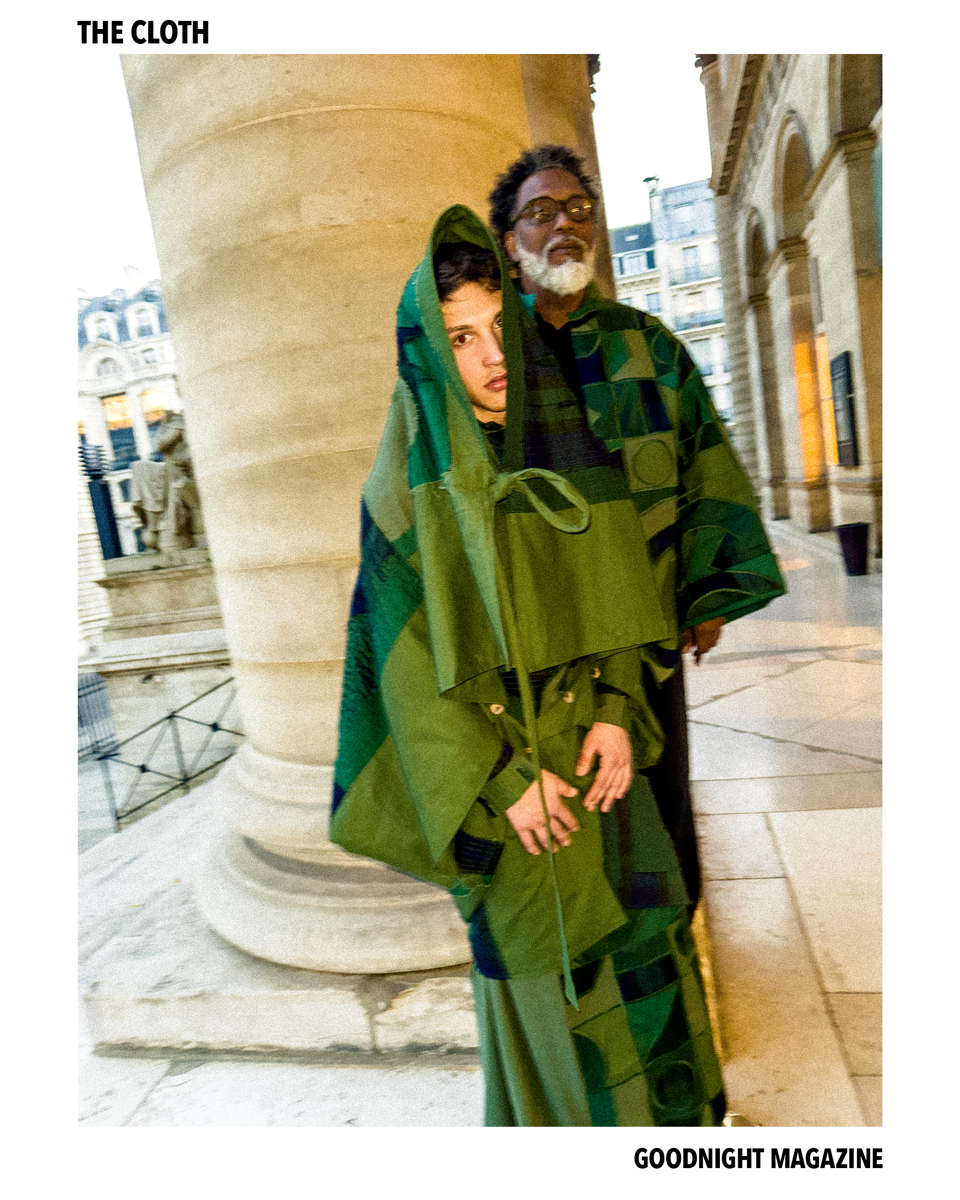
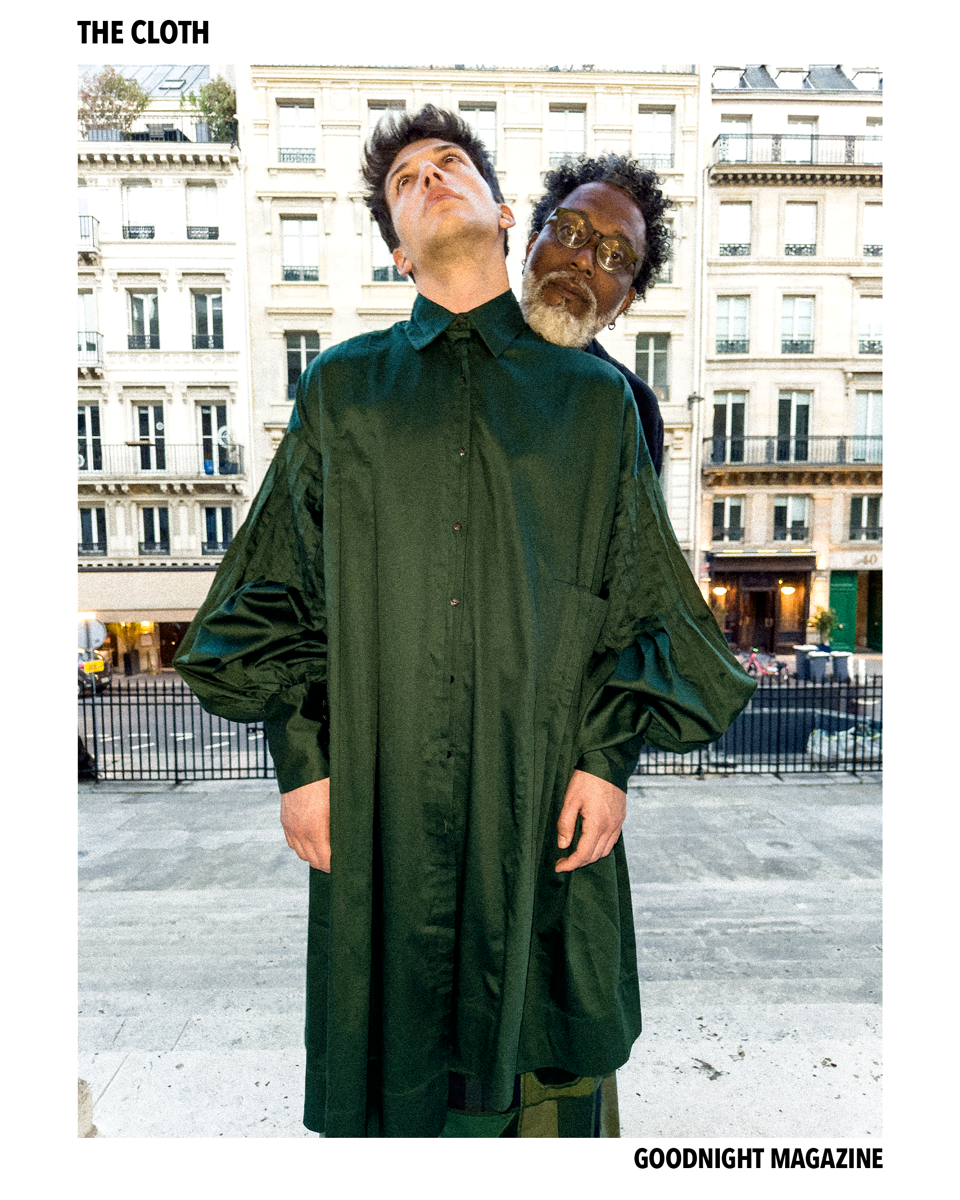
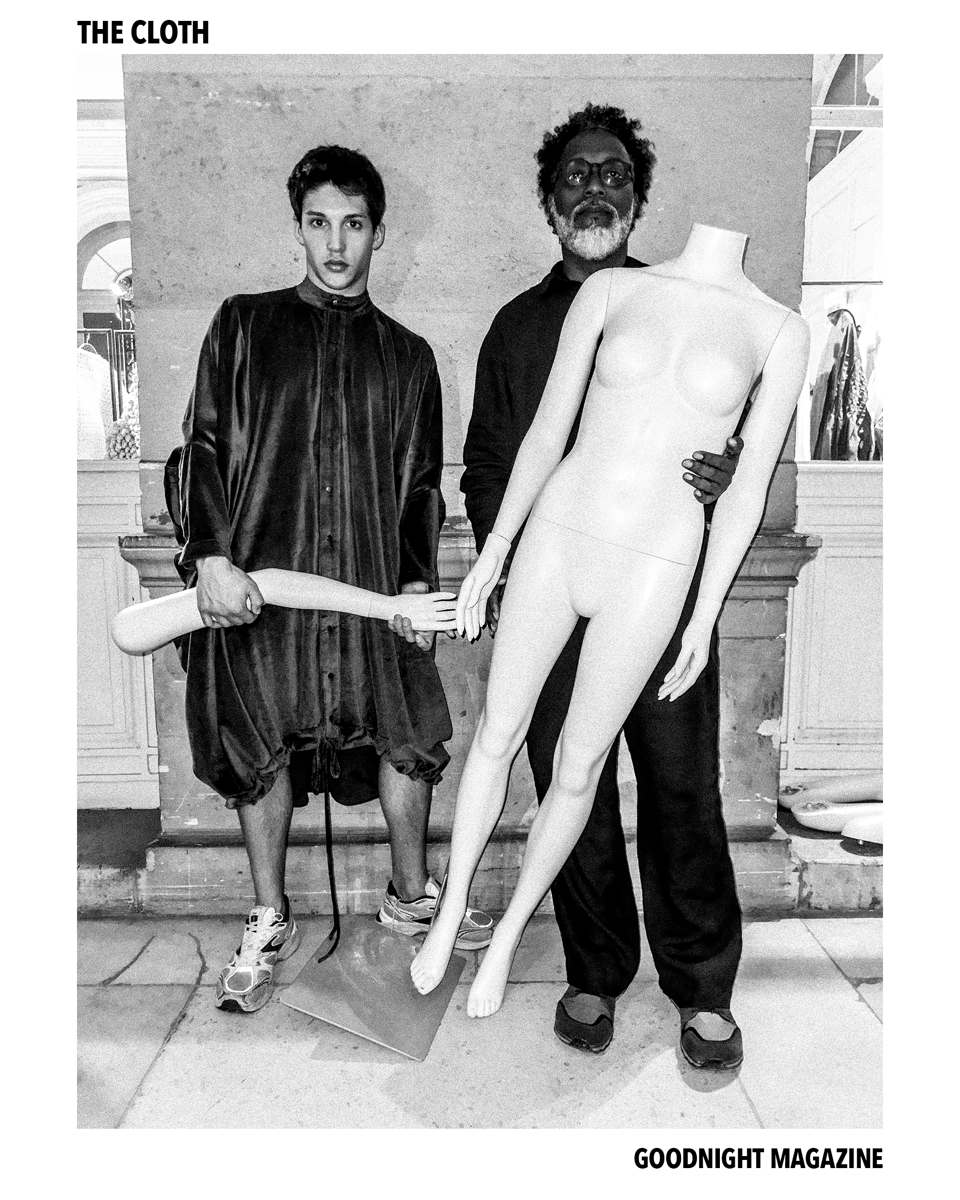
Q&A
GN: You founded The Cloth in 1986 in Trinidad and Tobago. When you first began, what vision did you have for the brand, and how has that vision grown over the decades?
RY: When I started, I didn’t want to be a “designer”. I wasn’t an “artist”; “artist” came later on when I started to work more and understand what I was doing. I didn’t believe in status clothes and I didn’t believe in sexy clothes. The other forms of clothes allowed me to talk about what was happening in my space—like Bob Marley existing, David Rudder existing; they spoke about the Caribbean experience as resistance. I knew Castro happened and the Haitian Revolution happened; I knew the February Revolution happened, the Black Power movement, the creation of the labour movement in Trinidad. I couldn’t do clothes without speaking about those things. I tried to have a voice about the things I was concerned with in a general way, and put it into clothing.
In 1986 there weren't brands; there were labels. The label started with me as part of a collective, and we would use it to try to say publicly what we couldn’t say in our own voices. We attempted to make things that were new to us and tried creating our own textiles. What it has become is a voice of many more than mine, even the voices of the wearers more so their voices. It's now a tool of trial and failure; a room for playing with ideas. The vision for The Cloth is that it would exist 40 years more; that it would stay a Caribbean-led brand but be shared with others whose voices need to be heard.
GN: You often describe clothing as your artistic medium. What drew you to express ideas, emotions, and cultural landscapes through garments rather than traditional art forms?
RY: I couldn’t paint and didn’t consider myself an artist, but I had concerns I wanted to talk about. My mother was stylish. My aunt was a dancer. My older brother was in fashion. So, clothing, style, fashion was something that was always around me as a young person. I grew up Anglican, and we had a way of seeing Trinidad as a new nation; the more I found out things that were hidden from me, the more I put that into the clothing when I started making. It wasn’t that I was trying to speak about emotions. It became that for people when they responded to the work.
Applique, which is one of the main techniques I use, could be a traditional art from this region.
GN: Your work reflects the rhythm and spirit of Caribbean life. How has growing up in Trinidad and Tobago shaped the aesthetic and storytelling within The Cloth?
RY: We grew up with old stories. For example, elders taught that eating salt on this part of the world would bind you here and interfere with the ability to fly away from this place. Liberation couldn’t happen here and if you didn’t eat salt you left this plane and could get back to that place of liberation which was Africa. And that’s reflected in Rasta culture.
When I was born, we were two years independent from the British. In Trinidad in 1970 there was the February Revolution, an expression of Black Power; it was about how the society should be running, about access in a place where Emancipation happened 140 years before and we were still a colony economically and socially. Doing clothing and doing fashion was another kind of physical, individual rebellion.
I pulled some of what was happening in the 70s, what was around me, what was tactile. We had calypso, and we found a way to speak about the space. The more I grew, the more I saw what was missing; the more I gathered, the more I added.
There is a rebelliousness, a trickiness here that allows for attempts and courage, an Anansi trickster spirit that will not be held back. A stubbornness, to try, to fail, to try something else until you try something that works.
GN: The Cloth has become a defining voice within Caribbean fashion and design. What do you believe has allowed the brand to remain bold and culturally resonant for nearly forty years?
RY: Being stubborn. Allowing failure to teach me. If Levi’s could have its 501 pants for so many years why can’t I have a shirt called the TSH5 and offer it to the market? We still make it, 39 years later. Six or seven years ago I brought in an investor/CEO, Sophie Bufton and her dad, to put some resources to the ideas, and I thank them for that. Sophie is still here and doing good work with the brand. She's of European heritage and I am Caribbean heritage and there’s a continuous internal dialogue about how to let these things exist with the old stories of how these two worlds meet, and try to navigate that.
Remembering The Cloth can represent the under commons. People think we do resort wear but we don’t. We do what I call “Spirit wear”; you wear something to big up yourself, to make yourself look large.
There is now an impression that the brand is leaning towards luxury. It's tricking itself. The DNA of it is working class revolutionary.
GN: Your Carnival band, Vulgar Fraction, turns the streets of Port-of-Spain into a kind of moving performance artwork. What inspires the themes behind these annual creations?
RY: The cover of Carnival allows us to investigate pressing concerns. Again, the trickster. Vulgar Fraction is a very small band—about 30 to 40 people, minimum 10. In 2020 we did a band called 50/70—a vulgar fraction in itself—that looked at 50 years after 1970, telling the stories of the Revolution, asking what were the gains and what was next. Then COVID happened and we didn’t have a Carnival; the next year we did a band mourning that, and mourning the people we lost to COVID, whose funerals we couldn’t attend. So, the band that year was Mas Mourning, as a place to grieve, using grief as a liberation tool. We used dried plants, dried flowers, and made it into wreaths so we became the wreaths, an offering of mourning.
And then the Gaza situation happened. As a Caribbean person recognizing that what was happening in Gaza happened to us 400-and-something years ago but this time it was happening with cell phones in hands and it could be reported. It’s ideas about things happening in my life and in other people’s lives, and making a statement about it.
Trinidad and Tobago Carnival itself has always been a vehicle for people to say what they couldn’t say during the rest of the year, or to become embodiments of ideas of wealth, class or access they didn’t have in real life. Vulgar Fraction is the same thing for me. I think about ideas for the band through the prism of my life and my work. What is the big thing on my mind turns into a concept for the band and the costumes. Mas is a form of communication, like any art.
GN: A distinctive part of your process is inviting participants to build and interpret their own costumes. Why is this hands-on, communal approach to making the mas so important to you?
RY: The way it feels now making is for some, art is for some. That’s not clear thinking. Hand work is a human technology; we have to remember that. Making is for anyone, art is for anyone, and mask making especially is for anyone. The set up in Western society, including the Caribbean, makes a distinction between artist and the public, but mas in Trinidad Carnival has always been about democratic making, and democratic playing—the performance of the mas at Carnival. Communal making is part of Carnival tradition, and it could be lost if we maintain a wall between masmakers and mas players.
People get engaged because they are encouraged to get involved in the making. Making has been removed from us; it feels like some people can do it and some can’t; we get things in packages. In Vulgar Fraction the package you get is a blank slate; you get to make it yours.
GN: Your family background includes strong traditions of community leadership and labor organization. How has that history influenced the way you think about design, creativity, and collective identity?
RY: It allowed us to try. My brother Richard has been involved with fashion for 45 years. We try and we fail and failure teaches us.
My father was a trade unionist; he founded a trade union in 1962. His father Thomas Young founded a trade union in the States. My mother was one of the founders of a trade union and a credit union on her university campus. We used to have union meetings at our house. We used to go to strike camps. My mother’s grandfather was one of our first composers of music and my aunt had a dance troupe, performing the first African folk ballet done in Trinidad, in 1972. So, to us, organizing people is part of what you do. And doing fashion, which is not something you organize but something you make, we still operate as part of an artists’ collective: our atelier is in Granderson Lab, which is part of an arts support organization called Alice Yard, and we collaborate with them.
I found a way to have something called The Cloth Speaks, where I would pull ideas together and have people dissect them. I never went to university and I kind of slipped through school. I ask a question and design is finding a solution.
GN: The Cloth has reached international audiences through exhibitions, fashion weeks, and cultural showcases from Paris to Tokyo. What has it meant to share Caribbean design and storytelling on these global stages?
RY: I’m part of a framework called CANEX which supports the design industry in Africa and the African diaspora to try to get them into those markets. So, we didn’t get in there through our own money and our collective will. We got there through community work and understanding that things had to happen developmentally so we went there holding each other as a group. And out of that we are developing PAFA (PanAfrican Fashion Alliance), a co-operative for African designers who went through CANEX. PAFA should be formalized as an organization by the end of the year. We are also part of another group called Brand 63 Africa, which has provided travel resources.
Caribbean stories are human stories. We tell each other stories in small places and bigger spaces. There are spaces people don’t get to see because they’re not around you and they have a limited view of what you can do through the lenses of imperialism, class, race, that dominant cultures see other cultures through—as something to extract from, make it theirs, modify it. So, it has been interesting to watch people see what we do in the way we do it. It’s deliberate storytelling; I practice applique but it’s distinctive in the way that I do it and allows me to grab stories and put them in your face for you to deal with them. It’s not woven but applied, heavily crafted, to convey a message. It’s not just a jacket and pants, but a jacket and pants completely embossed with stories, shouting but also quiet.
GN: In addition to designing garments, you often create spaces for discussion and learning around the ideas behind your work. Why is conversation and knowledge-sharing an important extension of your creative practice?
RY: The conversations are the most exciting thing, because that’s a physical manifestation of community, you put an idea out and people come and they have discussions. We learn by telling stories. We need spaces for that, even the smallest circles of sharing and discussion. In this period of time community life is under attack.
GN: Finally, what does the term “Good night” mean to you?
RY: In Trinidad and the English-speaking Caribbean, you walk into a place and you tell people “good night”; you see someone on the street and you say good night. We say “good night” as a welcome, a greeting and a goodbye.
CREDITS
Photos courtesy of A. DeNino
Style: A. DeNino
Model: Lorenzo Barbin