
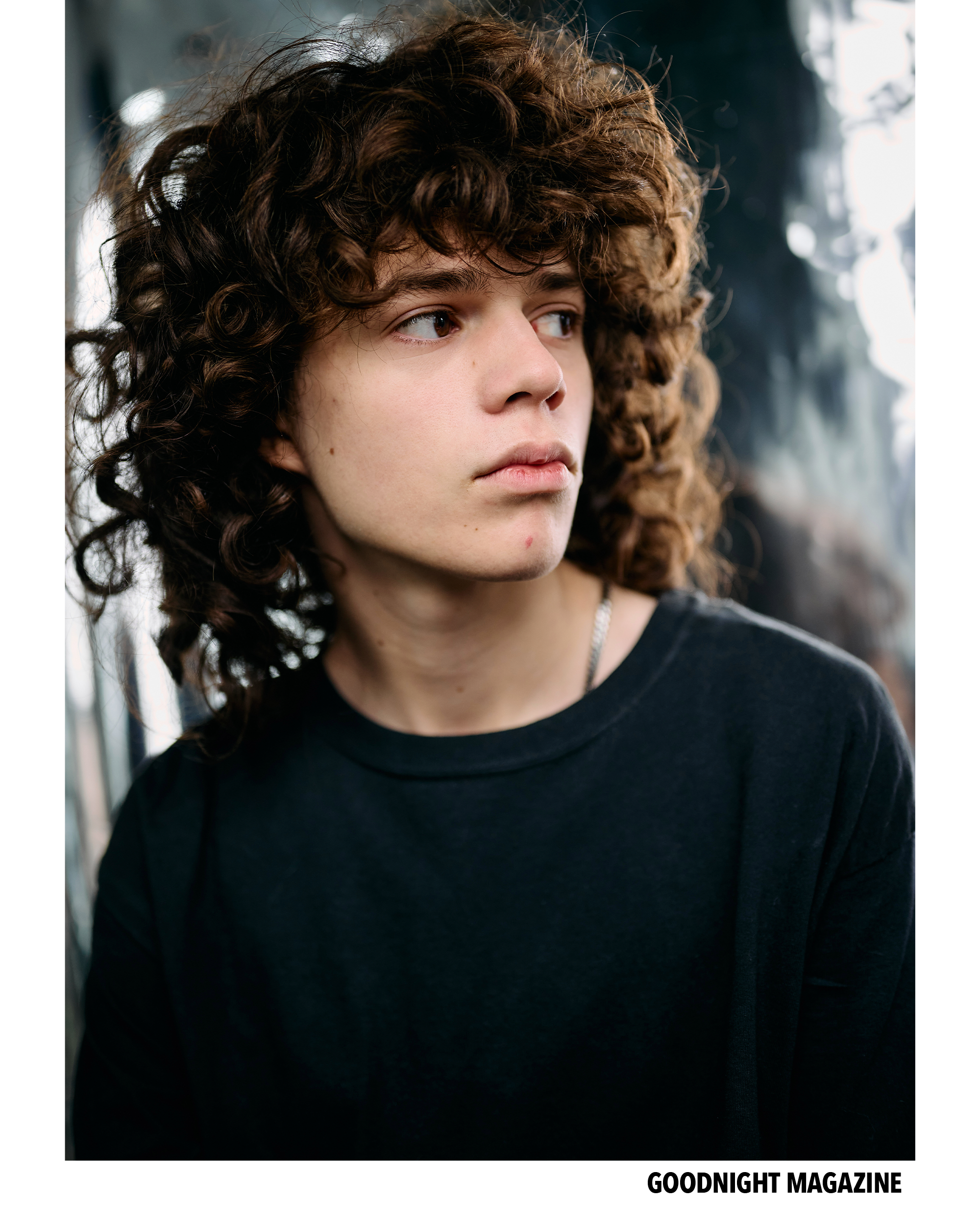
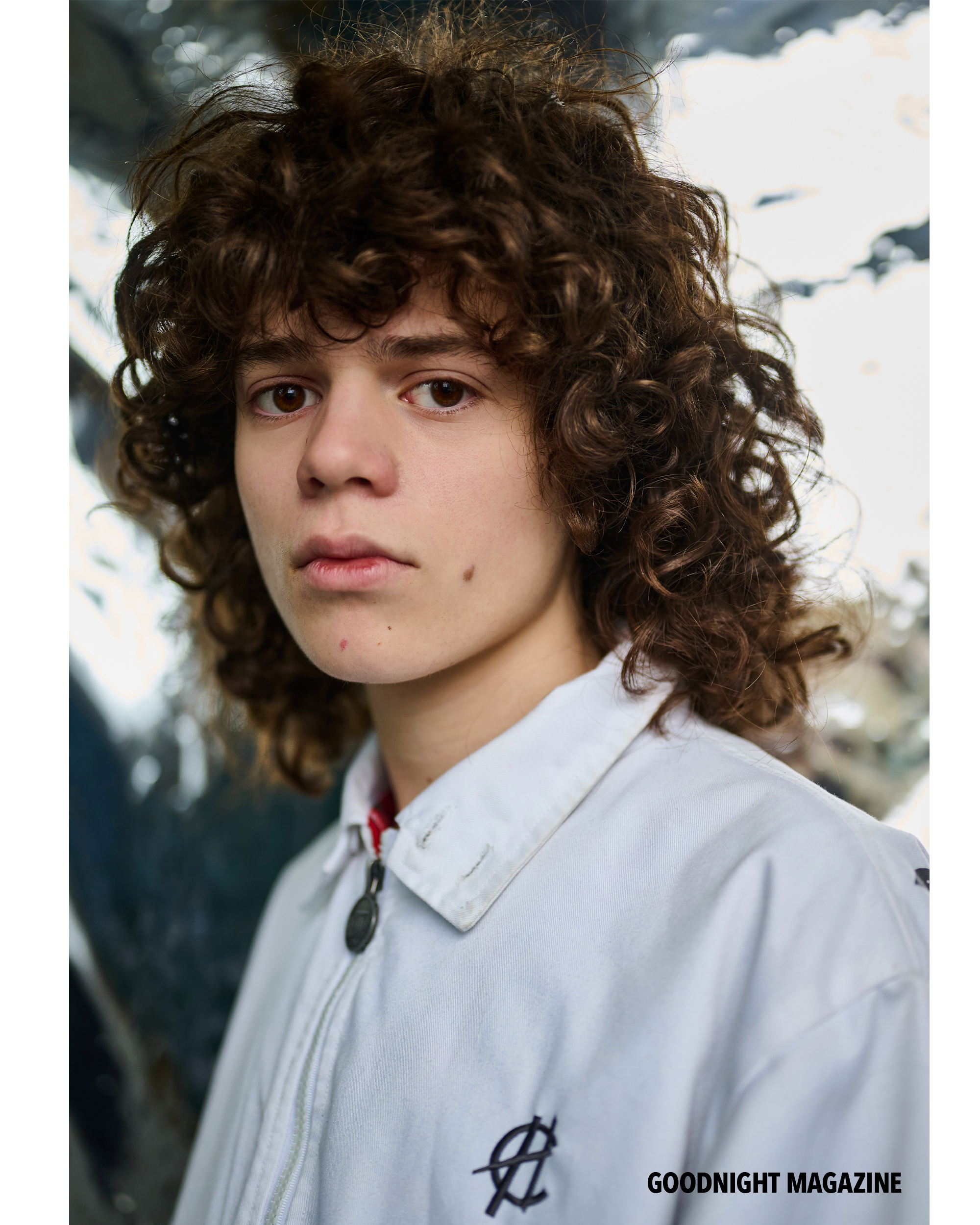
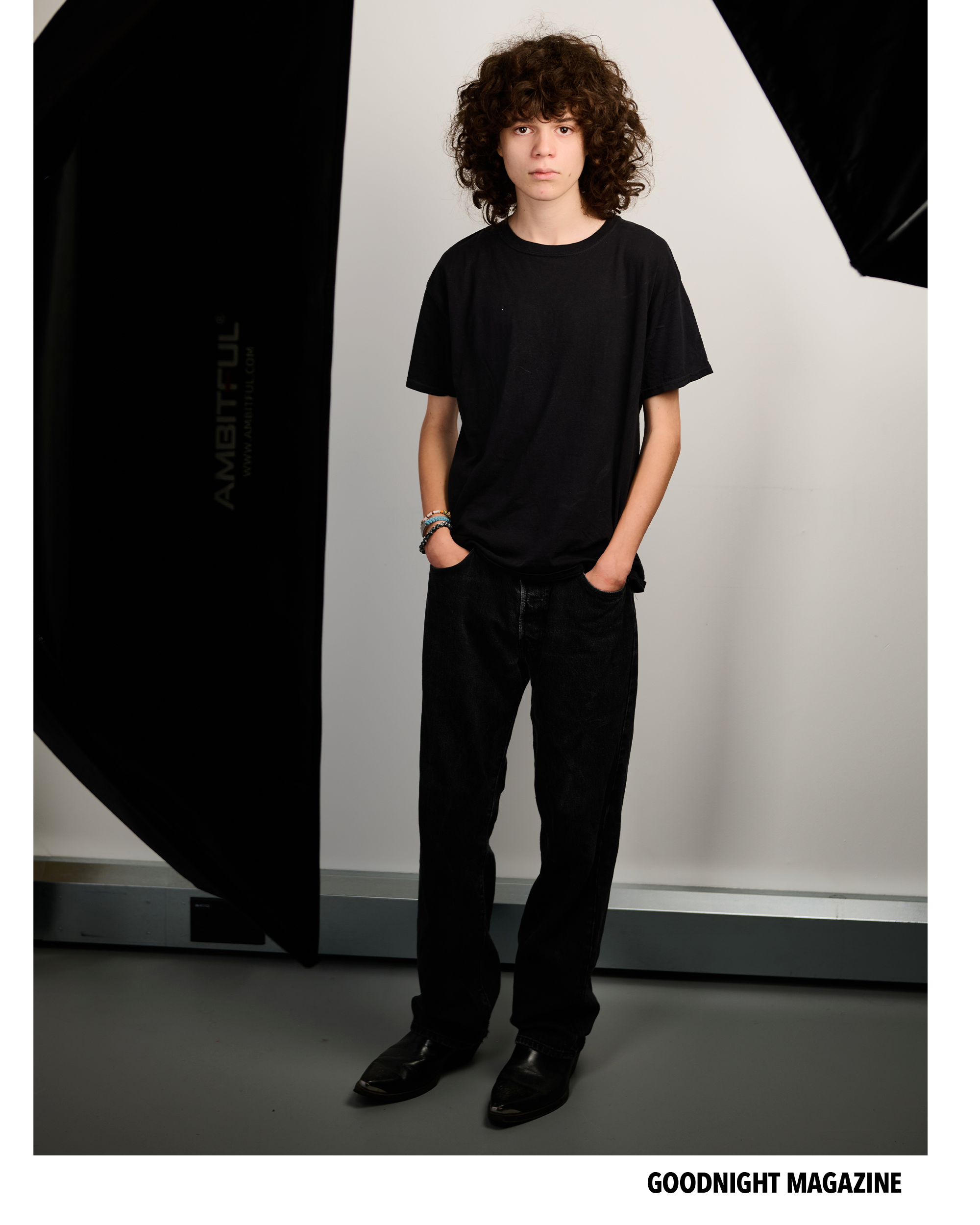
woody norman
photographer : jenny smith
GN: You began working professionally at a remarkably young age. When you look back at those earliest experiences now, what did acting mean to you then, and what does it mean to you now that you have experienced the profession from the inside?
WN : It was very different when I was 5, in the same way that everything is different when you’re that young — new and exciting. Now that I’m older, I obviously can think deeper about what I do because I can draw from more life experience. I know that I’m still at the beginning of my journey, and I will go through many more experiences that can be used as inspiration in the future.
GN: There is a particular challenge in being a young actor surrounded by established performers. What did you learn simply by observing actors at work when you were too young to fully understand the significance of the people you were standing beside?
WN : I think it was very beneficial to me at the time. Understanding the significance of the people around me might have intimidated me when I was younger. I am so fortunate that I got to grow up around such amazing people and have them as influences on me and my work.
GN: In C’mon, C’mon, you played Jesse opposite Joaquin Phoenix and Gaby Hoffmann, giving a performance that was remarkably spontaneous without ever feeling undisciplined. How did you balance the natural instincts of a child with the precision required of an actor?
WN : There was not a day on set where I felt like I was an actor. Not a day where I felt I was doing a job. The film was very improvised and spontaneous. As a child, you are very spontaneous and there is no thought behind what you do, so it was the perfect film at the perfect time. I loved being able to go on set and go through these scenes with Joaquin where it just felt like play, almost.
GN: Your performance in C’mon, C’mon ultimately brought you a BAFTA nomination for Supporting Actor, alongside recognition from the Critics’ Choice Awards and the London Critics’ Circle. What did that moment mean to you as a young actor suddenly being told by the industry that your work had genuinely mattered?
WN : It was such an exciting time, and so intense. I can remember the moment Tom Allen read out the list of BAFTA nominations and my family going wild with excitement. One of my memories I go back to from the night of the BAFTAs is Lady Gaga blowing me a kiss. That was huge. Being lucky enough to get critical acclaim as a young actor has really helped my journey, and I have Mike Mills and Joaquin to thank for that. I will always be grateful for that.
GN: Your filmography has moved between historical drama, horror, science fiction, family stories and psychologically darker material. Do you deliberately seek contrasts between roles, or are you primarily drawn to characters who leave you with unanswered questions?
WN : I don’t really think about diversifying my filmography when I’m reading scripts. If I like the story and I can imagine myself in the role, then I want to do it. It just has to have something that draws me in. I am fortunate enough to enjoy lots of different genres of film and be drawn to a wider series of films.
GN: You recently appeared in Sukkwan Island, a film that premiered at Sundance and inhabits a far more psychologically austere territory. What attracts you to material that asks an audience to sit with discomfort rather than offering easy emotional resolutions?
WN : I loved this script, and I could tell within the first 20 pages that I wanted to play ‘Roy.’ The script blew me away, and I knew within an instant how amazing this film would be. Then I met the director, Vlad, who came to my family home for dinner. We got on so well and both shared the same passion for this story. Once Swann Arlaud came on board, I knew this film was going to be very special.
GN: Your next film, Paul Greengrass’s The Uprising, moves into the historical world of the 14th-century Peasants’ Revolt, alongside Andrew Garfield, Jamie Bell, Tom Hollander, Katherine Waterston and Thomasin McKenzie. What did entering such a historically charged period demand from you that contemporary roles have not?
WN : This role took a lot of preparation that I haven’t had to do before. I took several months of riding lessons and had to research the historical background of Richard II. Paul Greengrass sent me lots of research material that was very helpful with my prep. I also got to spend lunches with Paul discussing the preparation.
GN: You are also a musician, another discipline in which instinct, rhythm and emotional interpretation matter enormously. Does music give you a different vocabulary for understanding character, timing and emotion when you return to acting?
WN : Music is such a dear thing to me. I think music, for me, is my creative outlet when I’m not acting. I can be at home writing or gigging with my band, IVUL. Having an internal rhythm is such an important thing for an actor to have, and being able to riff off what other people in the scene are doing is incredibly beneficial.
GN: After so many years of working professionally, do you think your relationship with the camera has changed? Are you now more conscious of what the camera is seeing, or have you become better at forgetting that it is there?
WN : I’ve never really noticed the camera. I’ve always found it really easy to ignore. Being in the profession for so long has made me want to try my hand at directing someday, and hopefully I’ll be able to give that a go in the future.
GN: When the noise of work, premieres, performances and expectations finally falls away, what are your dreams for the person and actor you hope to become and, for you, what does the word “Goodnight” mean to you?
WN : i just want to be able to have the means to express myself and create things I enjoy, and hope people resonate with my work. I hope to continue doing my work for a long time ahead. I want to write, direct, make a film score, tour with IVUL (my band) and be lucky enough to spend my life being creative.
Goodnight means to me — to end my day and wake up to new possibilities.
Who We Are
Every decision we make is shaped by a clear sense of purpose. Our journey has been anything but ordinary. Through every step, we've focused on staying true to our values and making space for thoughtful, lasting work.
We believe in simple ideas, strong relationships, and lasting impact. What began as a passion project has evolved into something more. We’re proud of where we’ve been and even more excited for what’s ahead.