
jordan aaron hall
GN: You began performing professionally at ten, moving from Young Simba in The Lion King to Young Michael Jackson in Motown The Musical. How has growing up inside productions with such powerful cultural legacies shaped your understanding of inheriting a role and eventually making it your own?
JAH: Stepping into these shows have been some of the most defining and informative work of my career. Those experiences taught me that being a part of a legacy production is a beautiful blessing, but there can also be pressures and expectations that come with it. I also learned not to get so caught up in the legacy or what has been done before that I forget to honor the opportunity of being someone with a fresh perspective and experience that maybe has not been seen before in that particular show. I learned to always take up space and give myself the liberty to bring something new within the context of the experience. Those shows were beautiful lessons in honoring what came before me while also pushing it forward to new heights.
GN: Your career has moved across Broadway, television, film, writing, and directing. Do you think of these as separate disciplines, or are they ultimately different expressions of the same artistic voice?
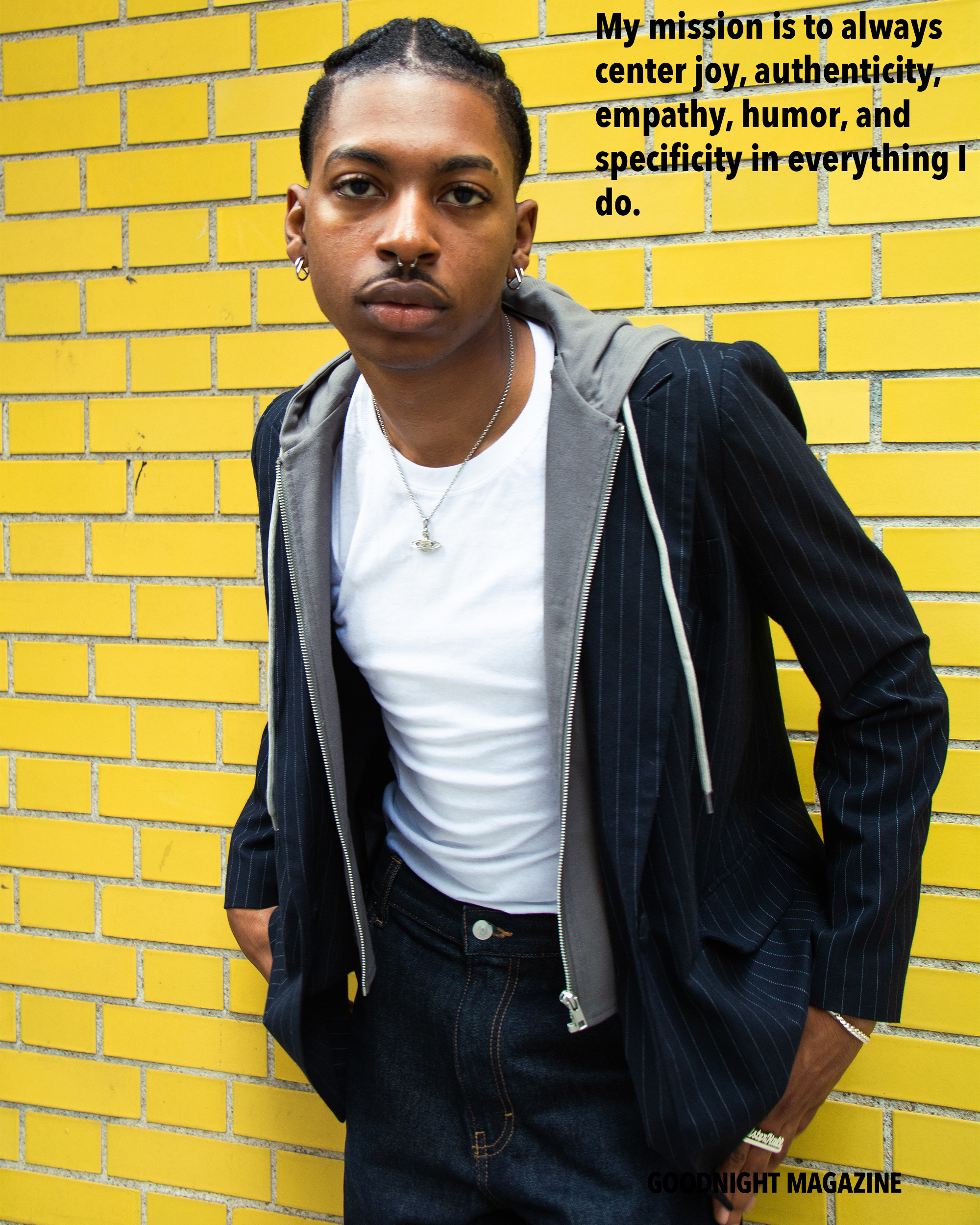
JAH: My mission is to always center joy, authenticity, empathy, humor, and specificity in everything I do. That core mission can expand across multiple mediums. I was taught from a young age to never put limits on myself or my gifts. So because I can act, I act. Because I can write and direct, I write and direct. Because I can sing, I sing. I have so much love and respect for all
mediums of artistic expression, and I think that partly comes from growing up in musical theater. I was exposed to so many different pathways of creativity that it became natural for me to express myself through all the mediums available to me.
My parents always say I was “like a sponge” everywhere I went growing up. I would do theater productions and know everyone’s lines and blocking just by watching and listening, even going as far as stepping in when we were missing an actor for rehearsal. You can ask my Lion King family about my days as the Rehearsal Rafiki, haha. I’ve always believed in being a student of the craft, and that follows me no matter where I go or what title I’m wearing that day.
GN: In A Different World, you’re stepping into a series whose original run became a cultural institution. What responsibility, if any, do you feel when participating in a new chapter that carries the memories and expectations of an earlier generation while speaking to a new one?
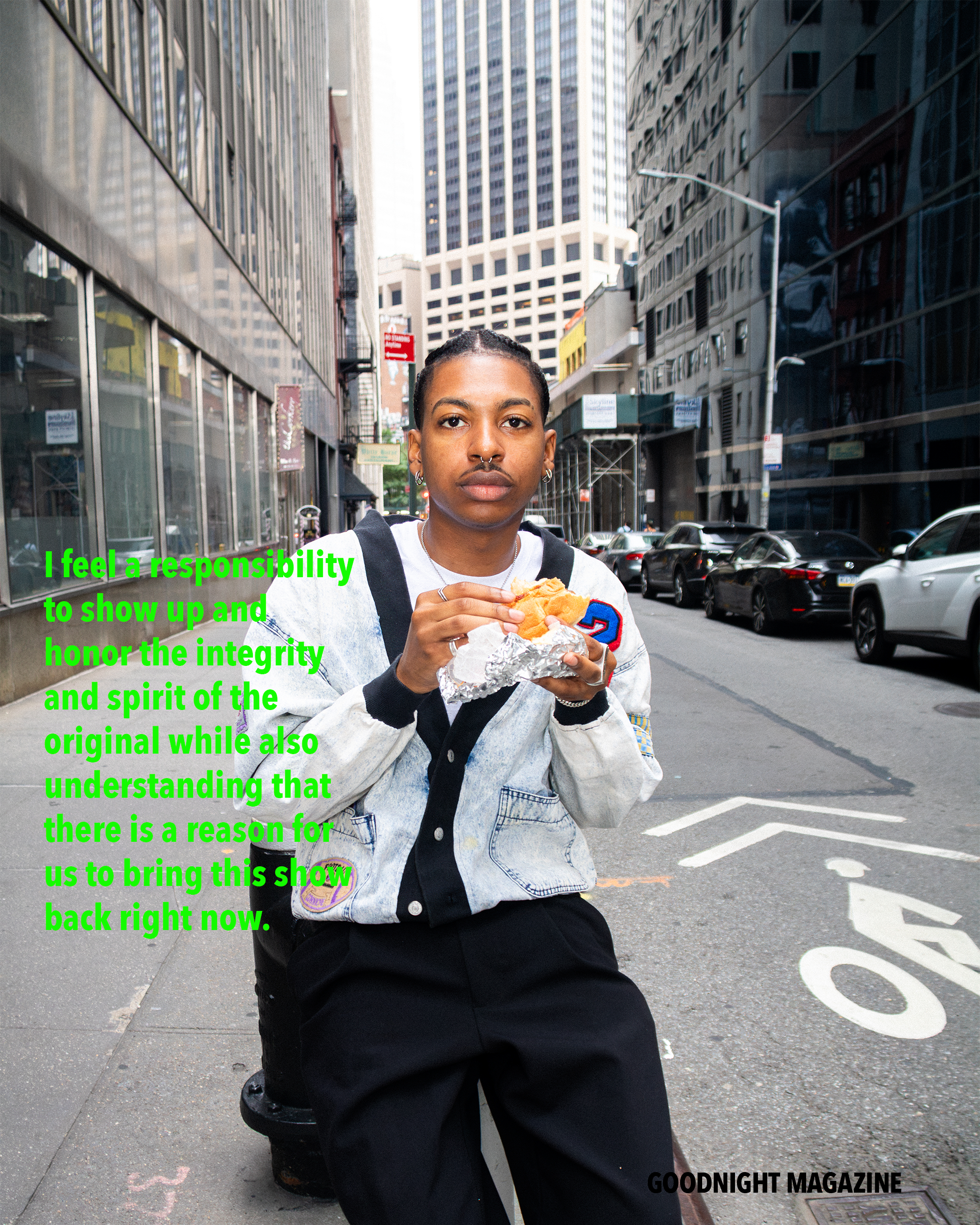
JAH: I am indeed stepping into a cultural institution. I feel a responsibility to show up and honor the integrity and spirit of the original while also understanding that there is a reason for us to bring this show back right now. Frankly, there are so many things happening in the world today that need to be spoken to, and there are so many things the original could not have tackled because of the social and political landscape in which it existed. So I’m excited to be in a time where we have a show centered on young Black people going to college and coming of age, while also having the OG characters there to guide us. It’s a beautiful showing of community and what it means to continue a legacy while creating one of your own.
GN: Amir is entering a fictional university, but the series is also engaging with very real questions about identity, community, ambition, and belonging. What do you hope audiences understand about this generation of young people through your character?
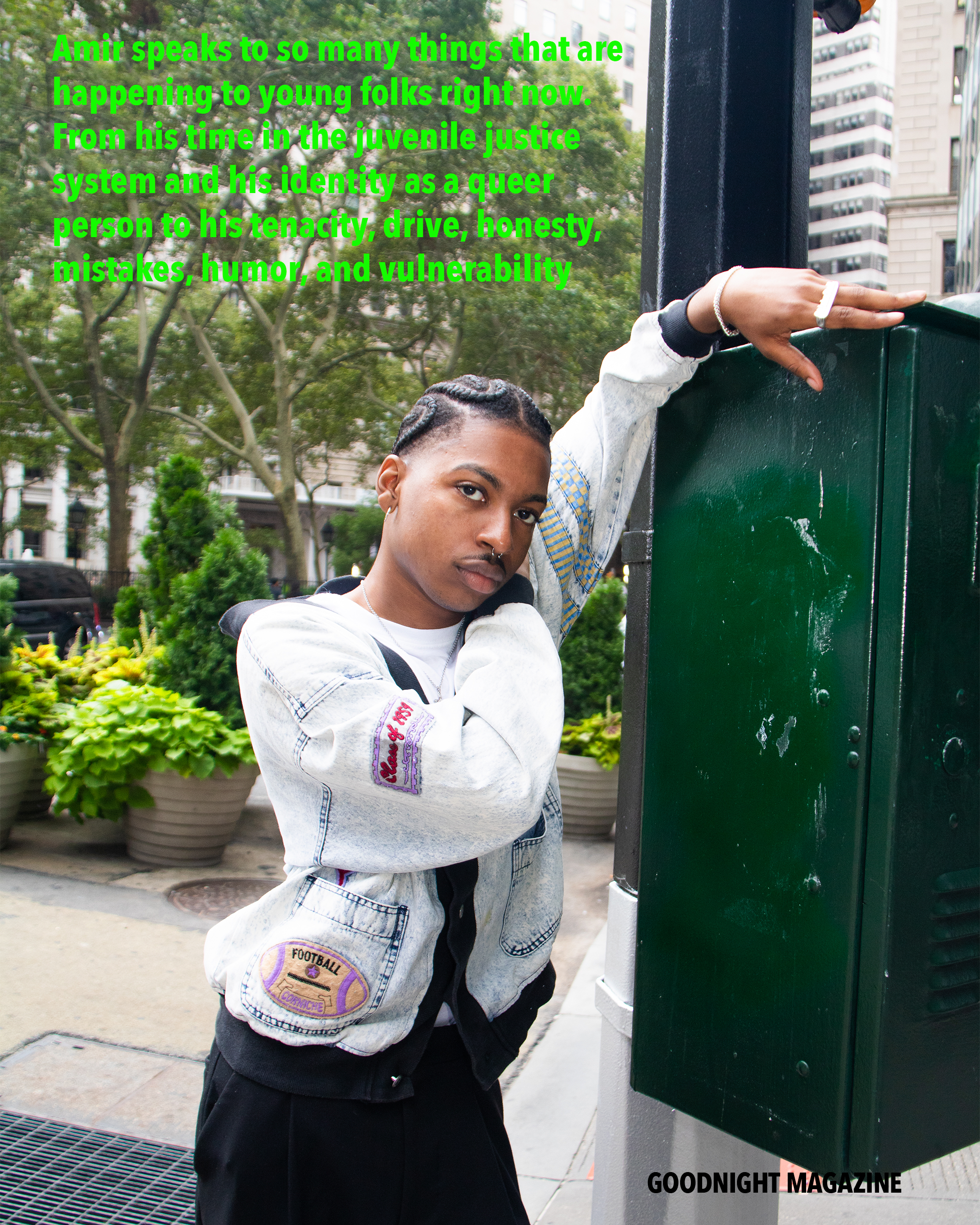
JAH: Amir speaks to so many things that are happening to young folks right now. From his time in the juvenile justice system and his identity as a queer person to his tenacity, drive, honesty, mistakes, humor, and vulnerability. Amir feels like someone who could be your best friend, your cousin, or your nephew. His experience as a young person who has been incarcerated will
speak to a lot of people who have also experienced that kind of hardship. I think he will also speak to a lot of queer folks who have been longing for representation beyond just being the “best friend” or a “side character.” He is a fully three dimensional person with beauty, flaws, and everything in between. I think it’s really special to see someone with all these different sides of
himself on screen, and I think folks will connect with that.
GN: You’ve portrayed characters across very different social and cultural contexts, from Young Pray Tell in Pose to Zeke in The Idea of You. What have those roles taught you about the difference between simply performing a character and developing a deeper relationship with the story that character represents?
JAH: These roles have taught me about the nuances of experience and how to honor the time periods and contexts of what I’m playing as an actor. Young Pray Tell existed in the 1960s, living a very tense and buttoned up life in the middle of a conservative family in Pittsburgh. Zeke, on the other hand, got to exist in his fullness, living authentically and getting to fanboy over this
band with his best friend and her cool mom, Anne Hathaway. Those roles showed me the connection between where we’ve been, where we are currently, and where we’re pushing the culture forward. I’m grateful for every single character I’ve played, but looking back, these two are pretty special.
GN: You wrote, produced, directed, and starred in Graduation Day. What did directing yourself reveal about your artistic instincts that acting alone perhaps had not? Did being both the actor and filmmaker change the way you understand leadership and collaboration on a set?
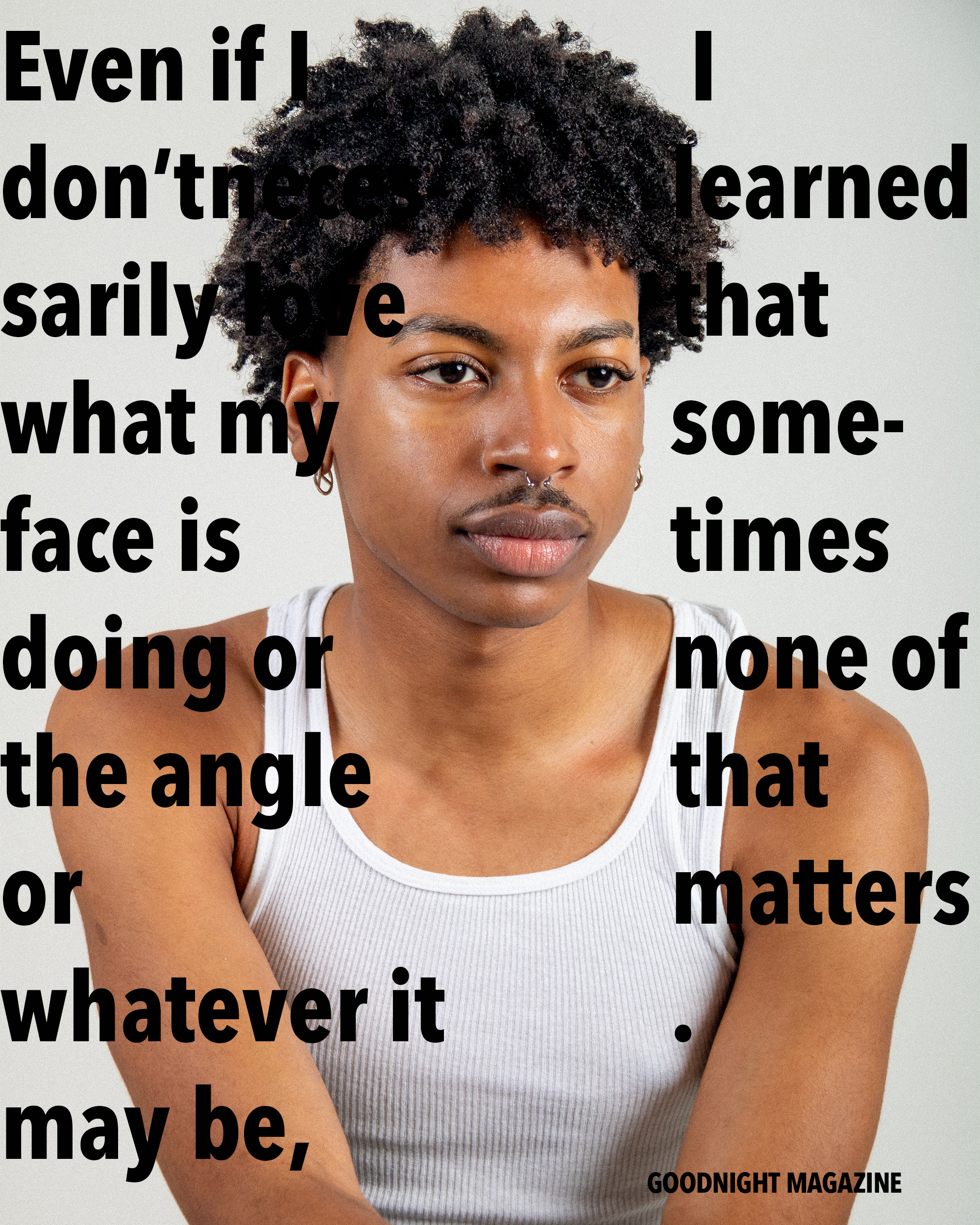
JAH: Directing myself was a lesson in discipline, instinct, and objectivity that I don’t think acting alone has provided me. I had to hold the vision for the entire short while also holding the performance as the lead actor. It taught me that the story is king and, at the end of the day, whatever is best for the story reigns. Even if I don’t necessarily love what my face is doing or the angle or whatever it may be, I learned that sometimes none of that matters. I finally understood that when a director says, “Moving on” or “We got it,” sometimes, we really did get it. There’s so much that goes into getting the right shot, and most of the time, it really has nothing to do with the performance. It was a beautiful lesson in trusting the team I’m working with and trusting that the story and vision will prevail anyway. It’s like a house. As long as the foundation is strong, the material will stand the test of time.
GN: You graduated cum laude from Boston Conservatory at Berklee with a BFA in Musical Theater. Formal training can provide discipline, while professional experience often demands instinct. At this point in your career, when do you find yourself relying on your training, and when do you trust your intuition?
JAH: I did graduate cum laude from the beautiful Boston Conservatory! I love my alma mater. I find myself relying on my training mostly when it comes to what my voice is doing, having a vision for a character, bringing a sense of freshness to each take, and having the stamina required to make a show over a long period of time. Conservatory training is intense. A lot of days, we were
up early and staying late into the evening, running from classes to a play or musical rehearsal as a performer while also prepping for something I was directing. So, in a lot of ways, I think my school taught me how to juggle multiple things without losing the steam to complete them all. With a TV show, it is hard, long, and fast. It’s a marathon, not a sprint. With that being said, as I get older, I also find myself trusting my instincts more because, at the end of the day, authenticity is key. Bringing in my own intuition and understanding of the character is just as useful as my training.
GN: Coming from Harlem and entering spaces as varied as Broadway, Hollywood, and conservatory training, how has your relationship to where you come from evolved as your career has expanded? How much of Harlem remains part of the artist you are today?
JAH: Harlem is a huge part of who I am as an artist and as a person. I always use the phrase “the beautification of New York City” whenever I’m describing a project I’m working on. I know Harlem isn’t a borough, but I damn near feel like it is. My city is such a vibrant place with grit, culture, and heart. I find that I’m often setting my work here. When I’m writing, I find myself
typing the scene heading and putting it somewhere uptown. I feel like I have my own responsibility to show this city in an authentic way. I can’t stand when I see a film or TV show set here and it’s clearly made by someone who has never actually lived in Harlem or New York City because it’s missing that spark of lived experience. My relationship to Harlem and to New York
has gotten so much stronger as my career and life have expanded, simply because I don’t think I understood how unique and unicorn like my city was until I traveled elsewhere. I guess the sentiment is true: if you can make it here, you can indeed make it anywhere.
GN: You’re entering a period in your career where you aren’t simply being cast in stories, you’re creating them. What kind of artistic legacy are you interested in building, and what do you hope remains after the individual performances and credits are no longer the headline?
JAH: I’m interested in building a legacy that is about showcasing and embodying the authentic human condition. One that celebrates the love, loss, joy, and depth of what it means to live a life. I hope people remember the moments that made them laugh and the moments that made them feel and think in ways they aren’t typically used to. I hope it encourages them to live their lives a little bolder and to make space for those they maybe wouldn’t have otherwise thought of.
GN: At the end of a demanding day, after the performances, cameras, meetings, and noise, what does your nightly routine look like? And when you finally say “goodnight,” what does that word mean to you personally?
JAH: My nightly routine looks like skincare, a cup of tea, some kind of snack, one of my favorite comedy shows playing in the background, whether it’s Martin, Abbott Elementary, It’s Always Sunny, or Insecure, a call to my parents or grandparents, and preparing whatever it is I’m tackling the next day on set.
Goodnight to me means the day is complete and I have done all I can do. Which means I can rest now. It’s a sweet reminder to release what’s been done and embrace what’s coming toward me with open arms.
photographer sarah katherine lawless
eic: kim goodnight