
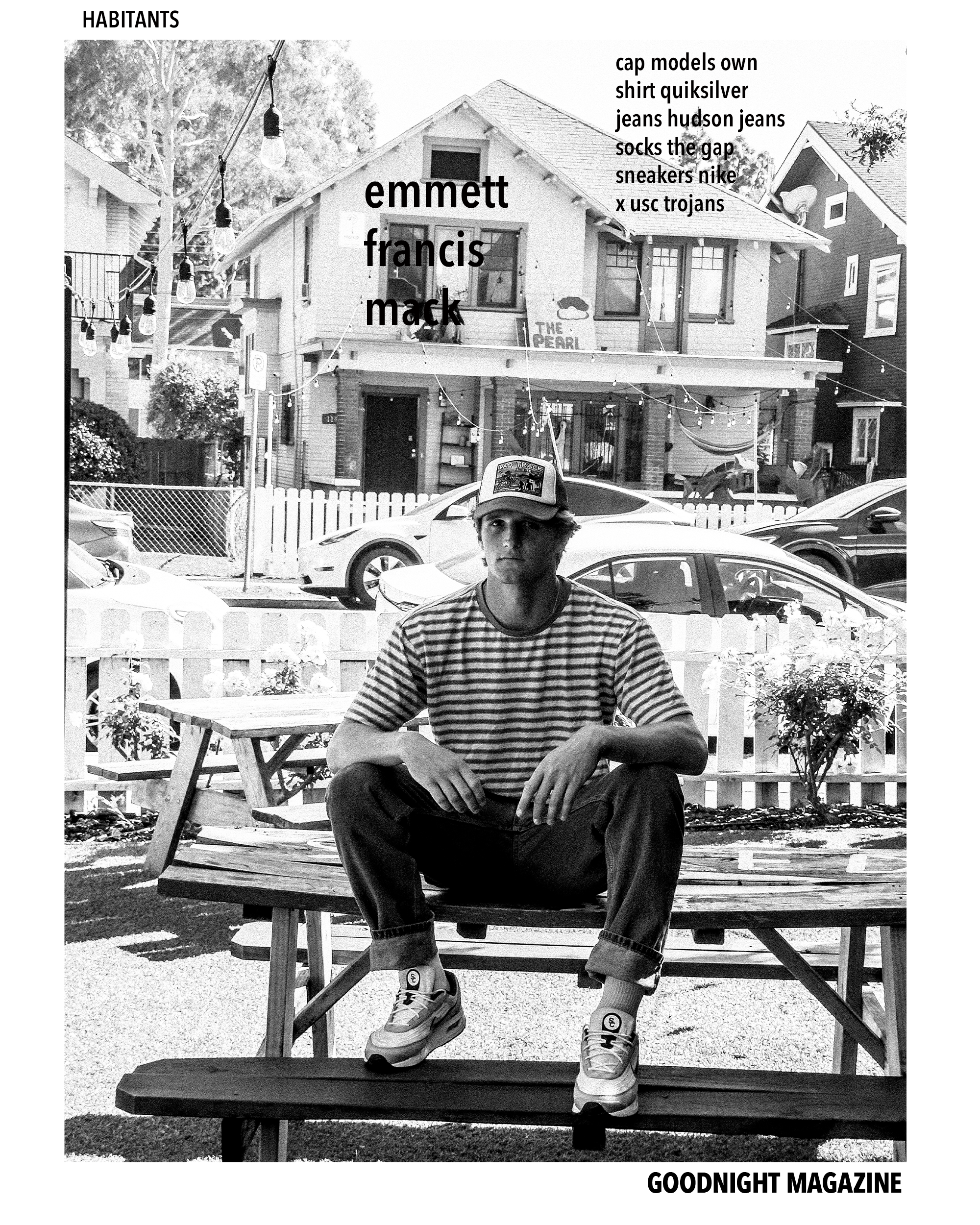
emmett francis mack
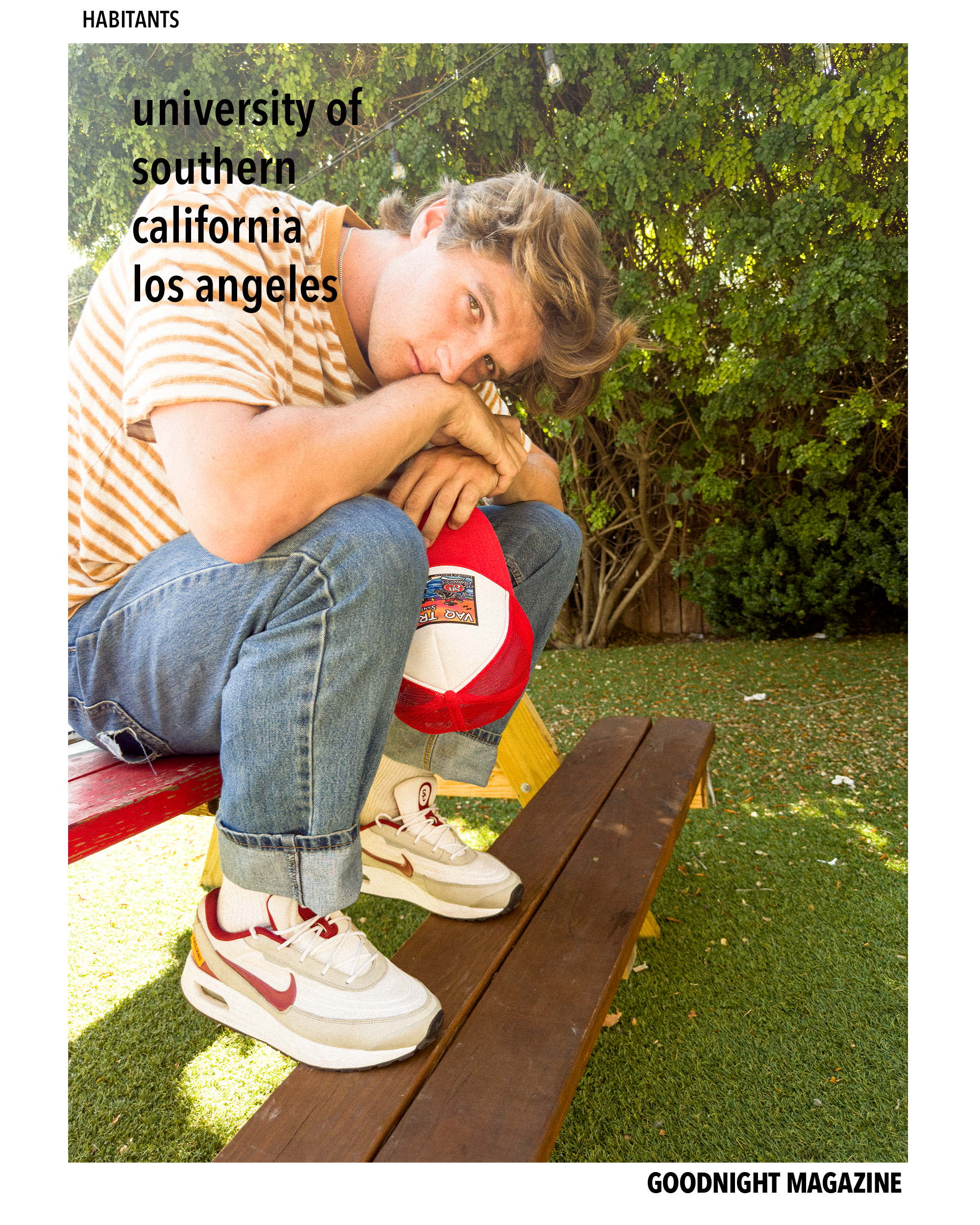
USC student -runner -sprinter 400
GN: To begin, how do you architect your days, and where, within that structure, do you allow space for rest not merely as recovery, but as intention?
EM: I revolve my day around my practice schedule, and practicing at 1 in the afternoon, that means almost all academics and body treatments are before, and then after practice I come home to "me time" to decompress, call friends and family, and get my body ready for the next day. But like clockwork, every evening, I have a quiet meal to slow down my day.
GN: What does “goodnight” signify for you: a definitive ending, a release of self, or a liminal passage into reflection and subconscious inquiry?
EM: This is when I start to get work done. Working on various side projects, or studying, this is when I can be productive. I do all of my busywork in the morning, but when I need to settle in and get in the zone, it happens now. When my body is relaxed, my day has winded down, and I can just focus.
GN:How would you characterize your relationship with sleep, as biological necessity, cultivated ritual, or a form of sanctuary from the demands of consciousness?
EM: This is my sacred time. I get 9 hours almost every night, hoping to dream. Nothing makes me happier than waking up refreshed with new ideas from my sleep, whether it be a laugh or a real-life current event I should be thinking about in my own life; I love how open-ended they are.
GN: In an age of relentless connectivity, how do you protect your final moments before sleep, and what helps you shift from activity into stillness?
EM: My 20 minutes of playing guitar are my shift. I turn off all electronics and just pick away. It slows the world down, and that's hard for me to do.
GN: Do you consider your evening rituals an extension of your creative process. If so, how does the act of unwinding inform the work you produce?
EM: Yes, in everything I do, especially coming up with new guitar songs and chord progressions.
GN: To what extent do your dreams both nocturnal and aspirational shape your artistic vision, and how have they evolved from childhood to the present?
EM: They are present in everything I do. I run for USC with the dream of winning a national championship. And I go to bed every night excited to see where my dreams will bring me. I think they have evolved because my specific goals are changing, but I strive to be the best in everything I do, and that has never changed.
GN: When sleep becomes elusive, where does your mind wander, and have those moments of restlessness ever yielded unexpected creative or philosophical insight?
EM: I often sit back up and try to play my guitar until I find different songs I've heard before on the neck. This is my favorite wrestless activity, and I can do it all night until I crash.
GN: Do you believe there is an ongoing dialogue between your waking self and your dreaming self, and if so, how does that exchange manifest in your work or decision-making?
EM: I think they walk hand in hand for me in just about everything I do. I write down my dreams in the morning to be able to go back and get a glimpse into my outlandish subconscious. I love being able to learn from myself while sleeping.
Photos courtesy of Kimberly Goodnight