
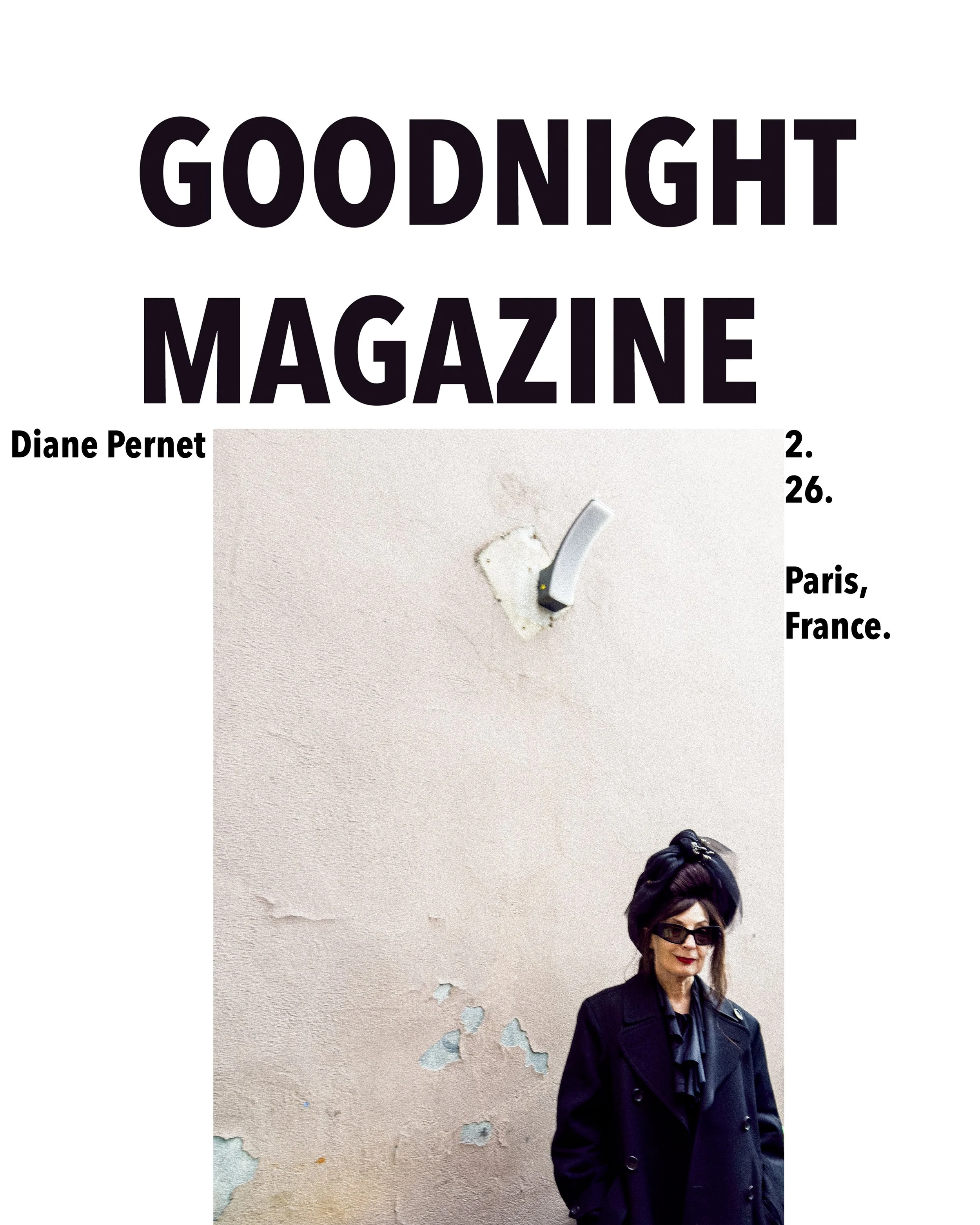
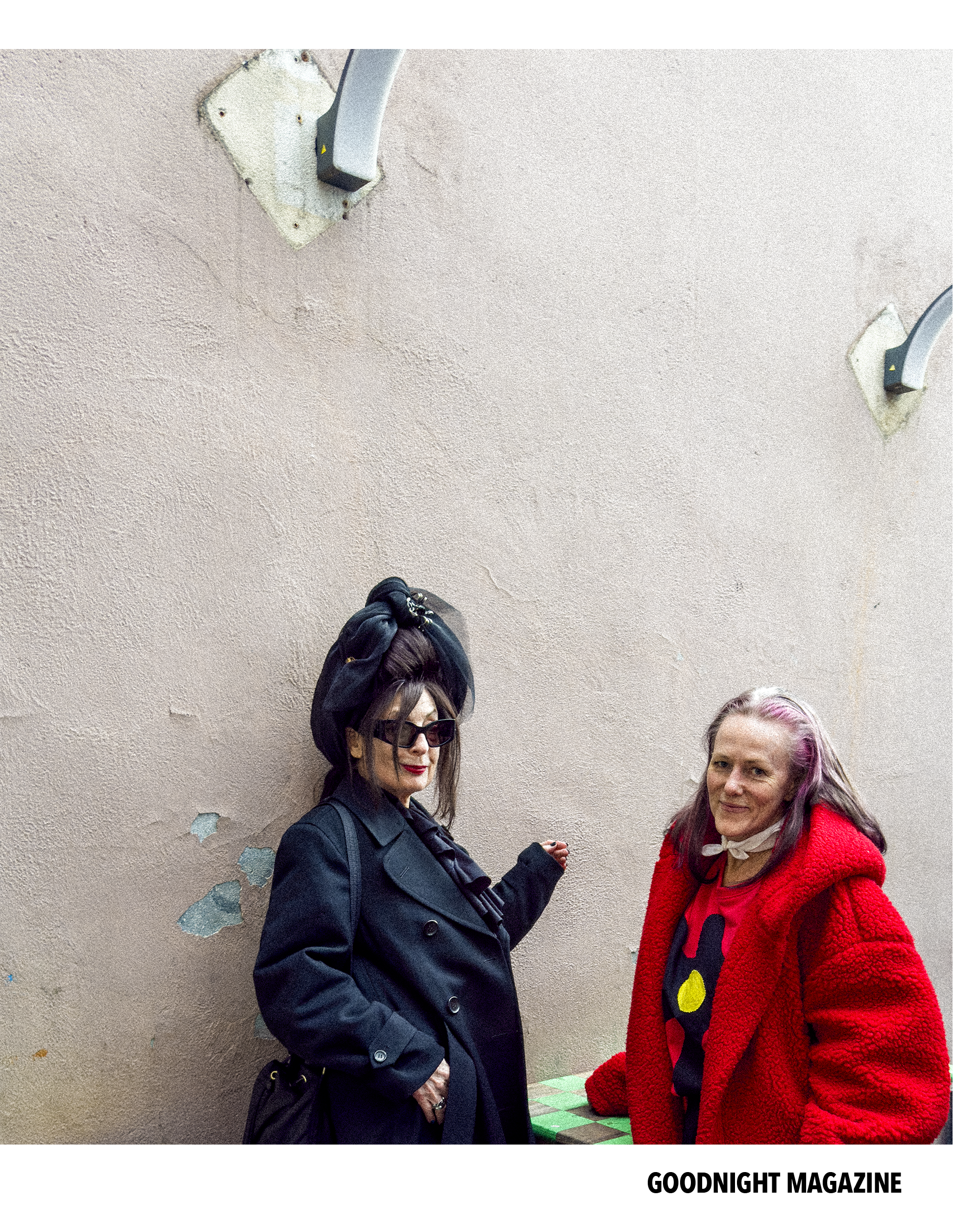
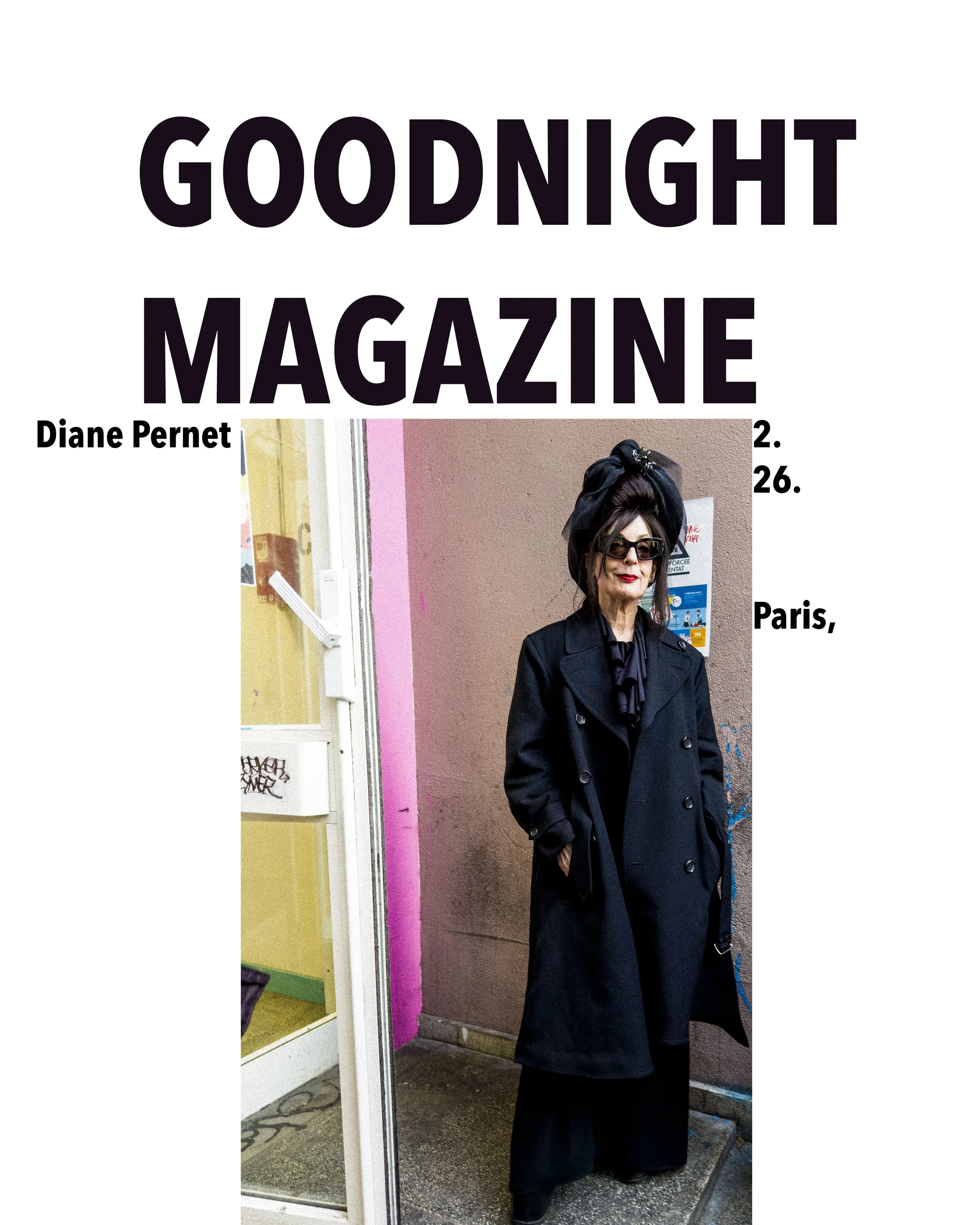
diane pernet fashion critic
Q&A
GN: You began your creative life wanting to design, yet you ultimately became one of fashion's most influential voices. Looking back, do you feel journalism allowed you more freedom than design ever could?
DP: Not at all. I was an independent designer, and as an independent I only had to answer to myself. That kind of autonomy is a very particular form of freedom, and it shaped everything that came after.
GN: Moving from New York to Paris marked a turning point for you. What did Paris give you that New York couldn't and what did you have to leave behind in the process?
DP: By 1987 the AIDS crisis had reached a devastating peak; I lost so many friends, crime was rampant, and as a fashion designer I no longer found New York inspiring. It took me about three years to actually leave, but I knew that if I wanted to stay in fashion it would be London, Milan, or Paris, and I chose Paris because it is the center of fashion. It was not an easy move: I did not have the funds to restart my business, so I took whatever work I could find, and journalism was never planned – it simply appeared as a path and I followed it. What I left behind was my business, my country, and my entire support system. What I found was a city that was not particularly welcoming at first, but I had made a decision and I was determined to make it work. My first job here was as a costume designer on a film, then assistant producer for CBC, then fashion editor for JOYCE, then online editor for Elle.com, then Vogue.fr, and in 2005 I launched my blog, which at that time was among the very first fashion blogs.
GN: A Shaded View on Fashion launched before blogging became a cultural norm. At the time, did you feel like you were documenting fashion, or quietly building an alternative archive?
DP: Having worked for Elle.com and Vogueparis.fr, I felt the constraints quite clearly: you essentially cover the advertisers and, at that time, perhaps one independent designer a season. I wanted to write about the designers I genuinely found interesting, and because I knew what it felt like to be independent, I wanted to support them – and I still do. Over the years I have had the privilege of encountering some of the most important designers of our time at the very beginning of their journeys: Demna, for instance, whose jury I sat on at the Royal Academy of Antwerp in 2006; Glenn Martens, who was in the year below him; Matthieu Blazy when he was graduating from La Cambre; Anthony Vaccarello when he showed his La Cambre collection at the Festival d’Hyères, where I was scouting talent; and of course Iris van Herpen, whose graduation collection I also saw. The list goes on. In that sense, I was both documenting our era and quietly building an alternative archive, which is something I continue to do.
GN: You've always gravitated toward the avant-garde and the unseen. What instinct guides you when you recognize a designer or idea before the rest of the industry does?
DP: I’ve never felt I needed anyone’s endorsement other than my own instincts. When I saw Demna’s first collection, I ended my 2006 blog post with “headhunters, this is the one to watch,” because it was simply obvious to me. When I saw Anthony’s collection at Hyères, I knew he would win, and it was the same with Iris van Herpen when I saw her graduation work. I followed Pieter Mulier from his time as a student of Raf Simons. The instinct is a mix of intuition, experience, and an emotional reaction to the work – it is immediate and unmistakable when it happens.
GN: Fashion film sits between art, commerce, and experimentation. What do you believe films can express about fashion that photography or runway shows cannot?
DP: What interests me most is storytelling, and cinema is the perfect vehicle for that. Film allows you to bring together image, sound, narrative, editing, styling, and of course movement, which creates a multi-sensory, emotional experience that goes far beyond a frozen image. There is absolutely space for both – film and photography, runway and still image – but runway shows and magazine spreads often have a shorter lifespan, while a film can live indefinitely and be revisited, reinterpreted, and discovered by new audiences over time.
GN: When you created ASVOFF, did you imagine it as a festival or as a space for creatives, outsiders, and new voices to feel seen?
DP: I always imagined it as a festival, but a festival as a platform – not only for emerging talents but also as a way to educate audiences who might not yet know the masters. ASVOFF is not just about screening films; it is also about panels, performances, and devoting attention to themes that feel urgent in our time, from mental health in fashion to AI-generated films, Black spectrum, Fashion Intelligence, and more. It is a space where different voices, disciplines, and perspectives can meet.
GN: Your signature black wardrobe has become inseparable from your identity. How would you describe your personal style?
DP: It is always difficult to describe oneself. I suppose my style is rather austere, though in recent years, from time to time, a touch of color has appeared – a big leap for me is my ink blue Balenciaga coat, which I love; a few years ago I might have considered it too bright. I am drawn to certain houses and designers I return to: Balenciaga, Comme des Garçons, Dries Van Noten, Lutz, Noir, and David Szeto, who still makes my skirts. A recent discovery is Amir Khorasany, who created a beautiful custom jacket for me with particularly striking shoulders. I of course love what Matières Fécales is doing, and the ingenious knits that Cécile Feilchenfeldt develops in collaboration with houses like Chanel, Schiaparelli, Balenciaga, and Matières Fécales, among others.
GN: You've witnessed fashion's shift from intimacy to immediacy, from salons to screens. What has been lost in that acceleration and what has unexpectedly been gained?
DP: Individuality seems to be eroding, because everything now is built around billions, whereas it used to be around millions, and when the stakes are that high, compromises are inevitable. What has been gained, however, is that through social media, emerging brands have a direct way to make themselves heard and to find their own communities without waiting for traditional gatekeepers.
GN: Technology continues to reshape how fashion is created and consumed. What excites you about this intersection?
DP: What excites me most is the access that technology provides. In terms of sustainability, for instance, technology allows us to prototype, visualize, and communicate ideas without necessarily producing waste, which opens up new ways of thinking about responsibility and experimentation.
GN: As someone included in the Business of Fashion 500, how do you personally define influence, visibility, longevity, or conviction?
DP: I have been part of the BOF 500 since its inception and, for years now, in the BOF Hall of Fame, which I imagine is a place for those of us who have been in the industry for decades and have become part of fashion’s landscape. My work is about providing a platform for fashion designers, filmmakers, and performers, and my aim is to shine a light on creativity and make it visible. Influence, for me, is tied to that responsibility; visibility is about who and what you choose to amplify; and longevity exists only as long as you remain relevant and engaged.
GN: You've spent decades amplifying emerging designers. What responsibility do you feel toward new generations entering an increasingly demanding industry?
DP: My door is open, and when I can offer a platform, I do. I’ve been doing this for the past 35 years and, before that, I had my own fashion brand for 13 years, so I’ve spent nearly half a century in this arena. I am happy to share a little wisdom, encouragement, and perspective along the way, especially when it can help someone navigate an industry that is both exhilarating and unforgiving.
GN: What does the term Goodnight mean to you?
DP: It means it is time to shut the computer and dream. That small gesture of closing the screen is also a way of opening another space – one where ideas can drift, reorder themselves, and perhaps return in the morning in a different light.
Photography courtesy of KIMBERLY GOODNIGHT & EU. Editor A. DENINO