
Ricco Ross
photographer: lensbymi
stylist: kimberly goodnight
grooming by veronica nunez using jaxon lane and pattern haircare for art department agency
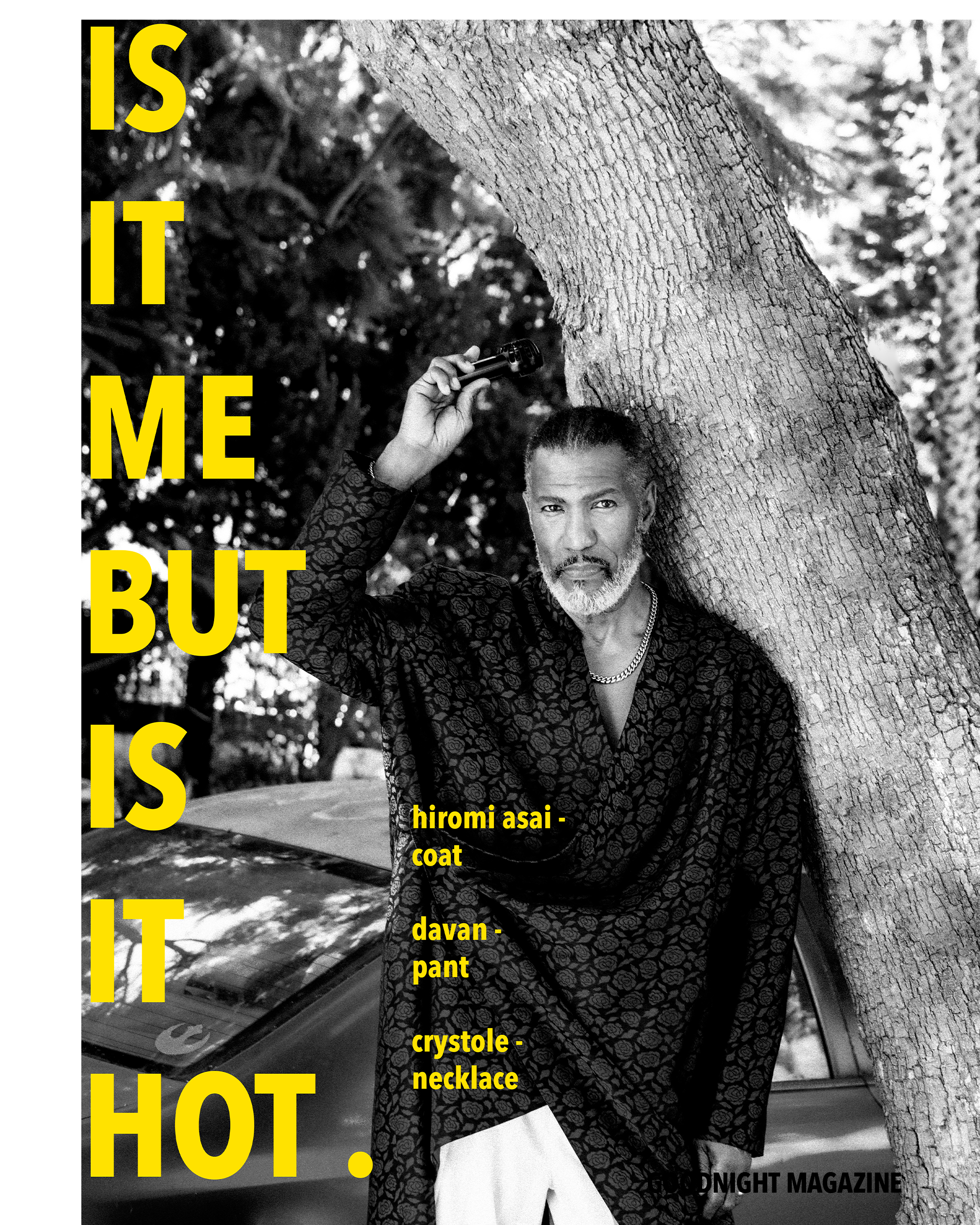
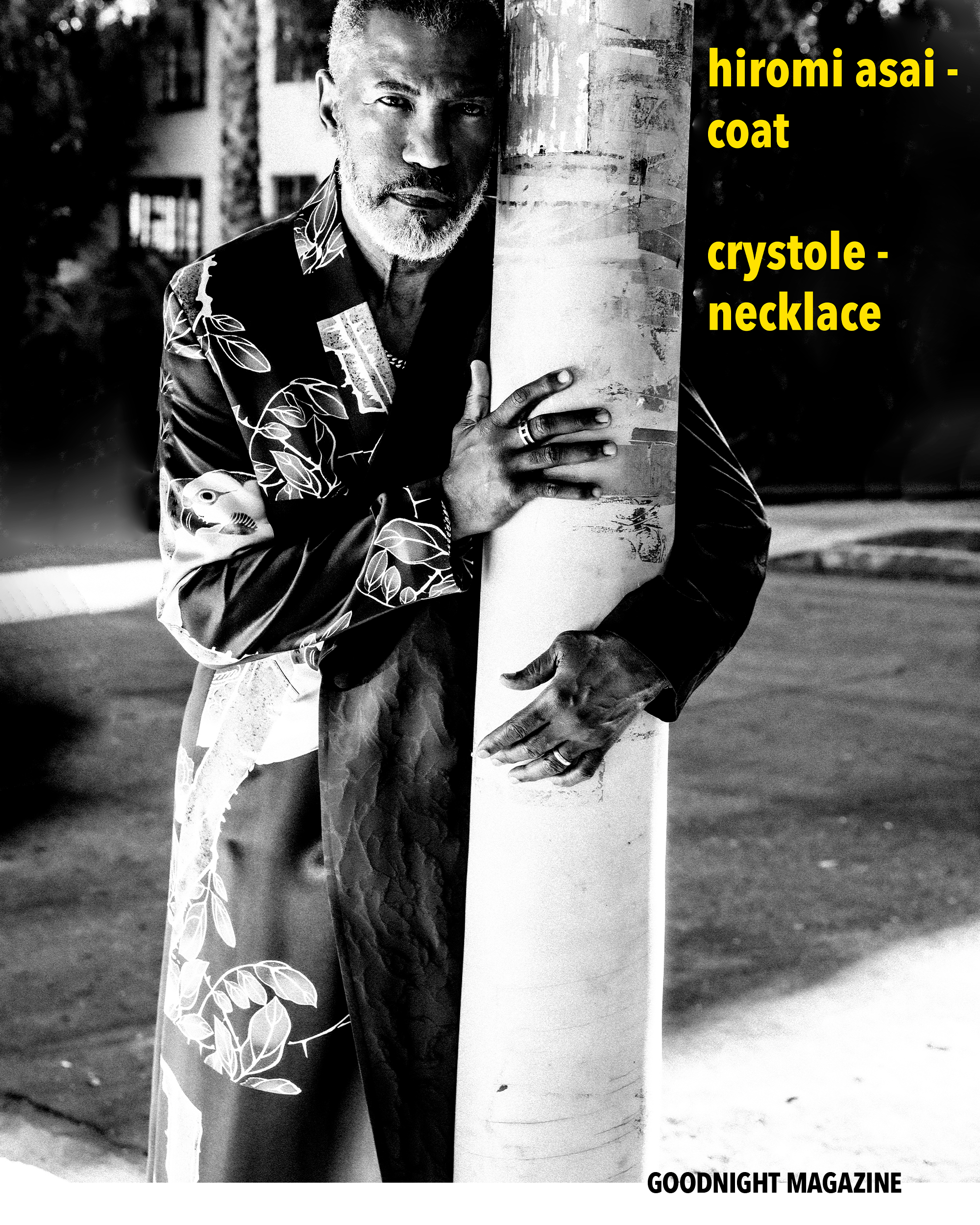
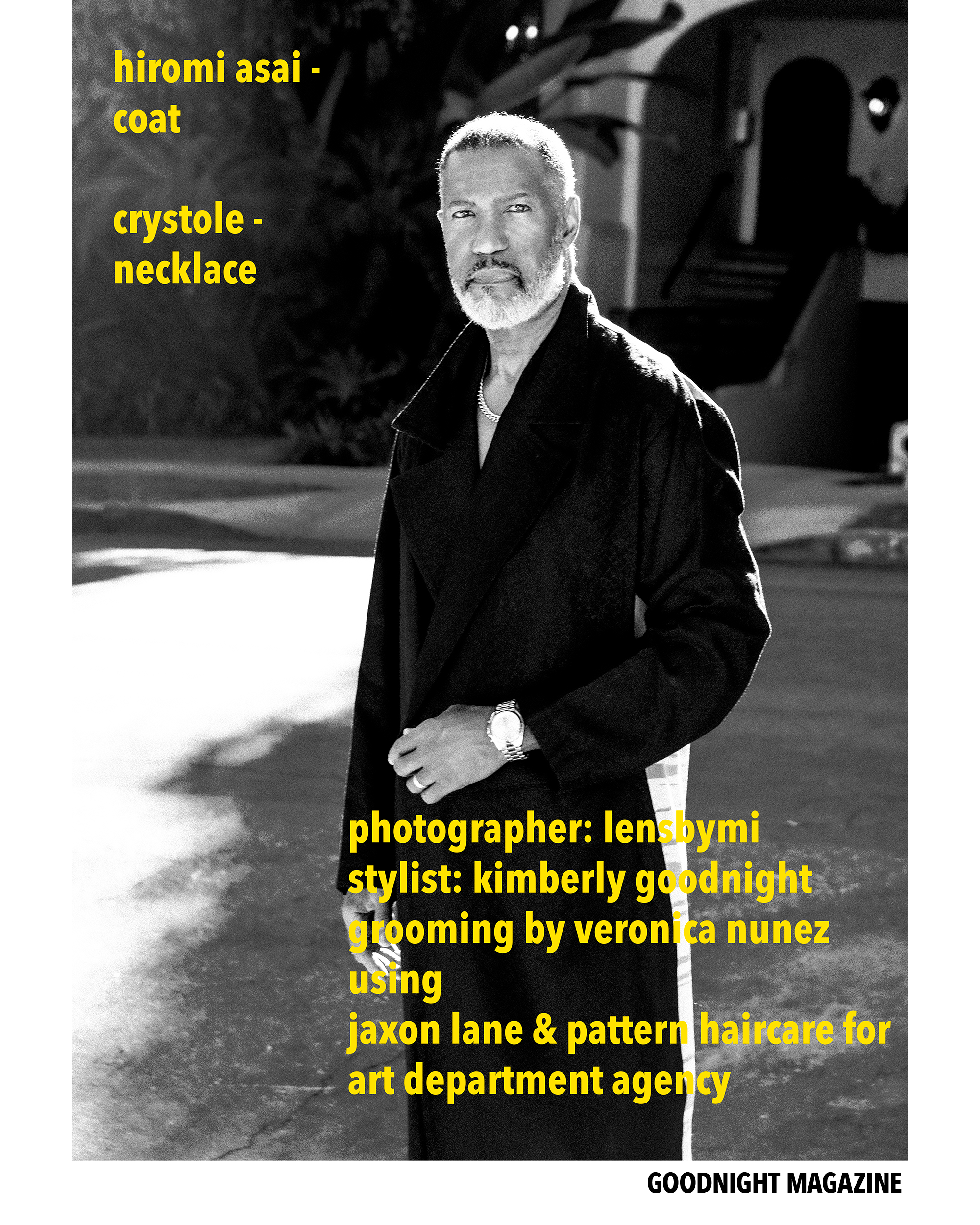
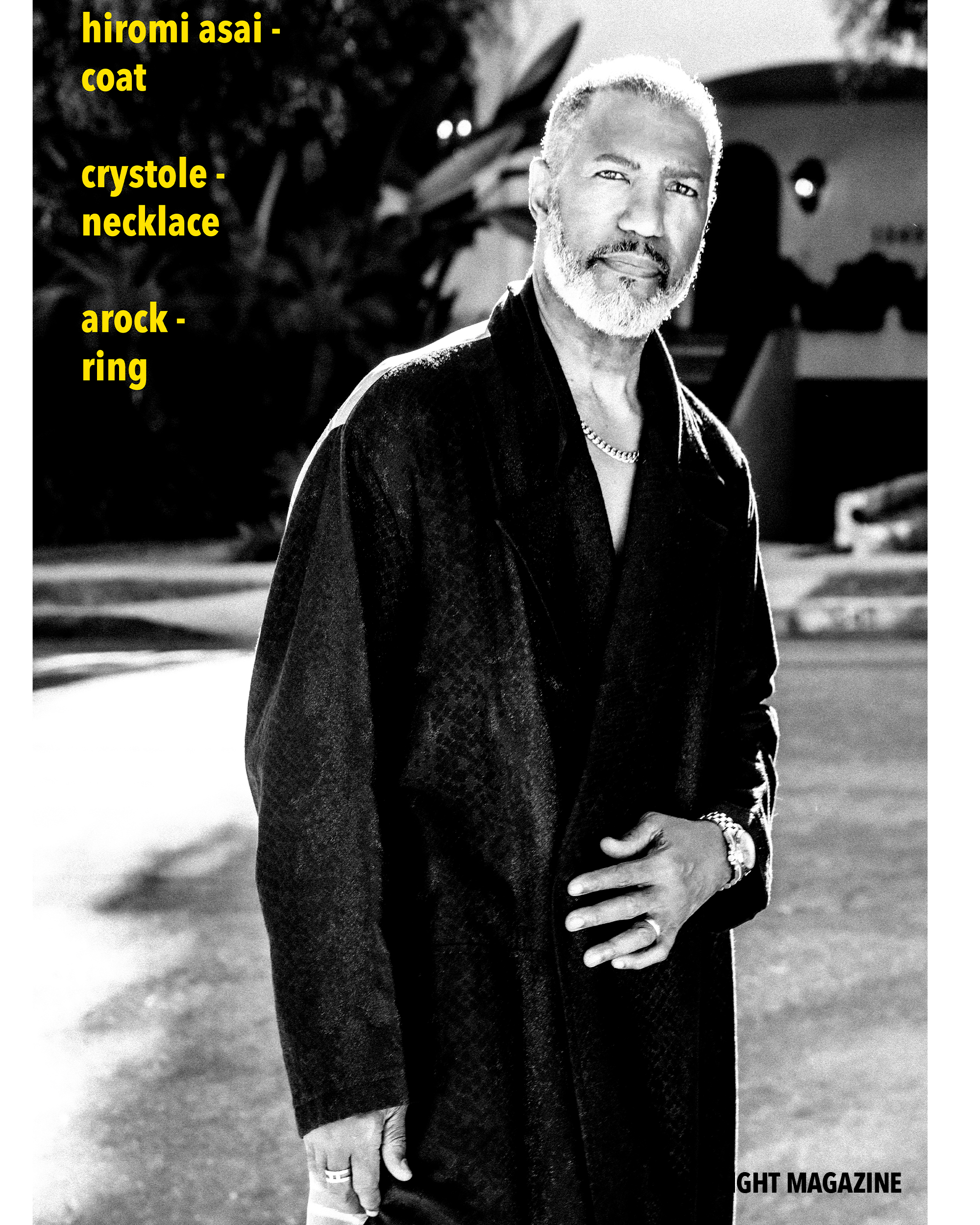
GN: Beauty in Black has become a global Netflix phenomenon. When you first stepped into the role of Horace Bellaire, did you have any sense that the series would connect with audiences on this scale?
RR: Not at all. I am still amazed at the attraction to him because at times he seems to suffer from being irrationally impulsive, jealous, overreactive, unforgiving, extremely homophobic, hypocritical… shall I go on? I guess people love a good bad boy.
GN: Horace is the patriarch of the Bellaire family and a man accustomed to power, control, and having the final word. What did you understand about him immediately, and what took you longer to discover?
RR: I knew pretty early on that I would use my own father as the foundation for the role. He was a big man physically and a big man in the community who never seemed to raise his voice in anger, which made others quiet themselves to hear him when he spoke. It took longer to understand the complexities of his sexuality.
GN: Horace helped build the Beauty in Black cosmetics empire, so much of his identity is tied to what he has created and what he intends to leave behind. What does the character reveal about the complicated relationship between success, family, and legacy?
RR: That large sums of money change everything and mostly everyone. That success comes with a price and that the drive that garners that success is difficult to pass down to a generation that has been born into it.
GN: With Beauty in Black entering its final chapter, what can you tease about where Horace finds himself as the stakes surrounding the Bellaire family continue to rise?
RR: You can expect the unexpected.
GN: Beauty in Black operates in a world of ambition, family loyalty, secrets, and shifting power. What has been most interesting for you about exploring those dynamics through Horace?
RR: That absolute power corrupts absolutely.
GN: After decades in the industry, what excites you most when a role like Horace comes along? Are you looking for something different in a character today than you were earlier in your career?
RR: The complexity of the character and his intellect. When we first meet him, he appears to be poor when he’s rich. He appears to be old and feeble, but he’s strong and able. He seems homophobic, but he’s bi. At times, he can be the antagonist, and at other times, he appears to be the protagonist. To get all of this in one character is an actor’s dream.
Yes, as an artist, I want to continue to challenge myself. Earlier in my career, I was mostly just looking for work. Now I am looking for specific work.
GN: You were part of James Cameron’s Aliens, a film that became a defining piece of science-fiction cinema and continues to find new generations of fans. What do you remember most vividly about making that film?
RR: How hungry I was for the male lead role in the film. I felt that I had the chops to be the male lead in the film; however, at that time, it was a bridge too far for most filmmakers to have a Black male lead a movie like that. Even after two weeks of filming, when the male lead, James Remar, was removed from the project, the executives did not consider me as a replacement, but went outside the cast and brought in Michael Biehn, who did an amazing job. Still, I believe I could have done a different, but equally amazing, job if given the opportunity.
GN: When you were filming Aliens, could you possibly have imagined that people would still be talking about the movie and your character decades later?
RR: Lol… no, never! I had co-starred in a movie called Body Contact opposite Joely Richardson. It was my first male lead and romantic lead. We had such hopes for the movie, but in the movie there was a scene where the bad guys shot up a club, killing most of the people in hopes of killing Joely’s and my characters. It was a dark comedy, but weeks before the movie’s release there was a mass shooting, and I feel the film flopped because of it. From that moment on, I would just do my best at the things I had control of and let the cards fall where they may with everything else.
GN: Your career has taken you from Aliens and Mission: Impossible to series including Babylon 5, The Practice, ER, P-Valley, and now Beauty in Black. What do you believe has allowed you to continually reinvent yourself rather than become defined by one era or role?
RR: Father Time creates a number of changes, physically and mentally. I have never shied away from aging, even while watching many of my peers struggle to appear as young as they could. My decision was to be the best I could be as I aged. I soon discovered that I wasn’t aging out, but aging in.
GN: You’ve experienced Hollywood through several dramatically different periods. What is something about the industry today that you wish had existed when you were starting out?
RR: Equal opportunity for all, no matter one’s race, size, sexual orientation, able or disabled body, etc. At the beginning of my career, it seemed that White people’s stories and actors were the default and that people of color would orbit around that standard. I wish that stories, directing, producing and casting would have been based more on competence rather than complexion.
GN: On the other side, is there something about the Hollywood you entered that you feel today’s generation of actors could benefit from rediscovering?
RR: Yes, the lack of social media. Many young people want to be famous, but don’t want to take the time or do the work that creates talent, which transfers into fame. There are no shortcuts to a sustained successful career.
GN: Longevity in this business requires more than talent. Looking back, was there ever a moment when you seriously questioned whether to continue, and what kept you moving forward?
RR: Not really. However, when I was 30 years old, I was offered a pro basketball contract in Europe, and that took me a week to turn down. That was the closest I had come to tapping out.
GN: You’ve worked across film, television, independent productions, blockbusters, and cult classics. Is there a performance from your career that you feel audiences haven’t fully discovered yet?
RR: Yes, I played an immortal warrior called Hasim in an episode of Highlander called “Promises.” I play the character in the present as well as 300 years earlier. The language was so rich that I made the bold choice of giving him a British accent in the present time and an Arabic accent in the flashback scenes. It was a risk, but at the time, it was one of my most proud performances.
GN: You’re also a writer, producer, and CEO of Can You Dig It. How has becoming a storyteller behind the camera changed the way you approach your work in front of it?
RR: It hasn’t really. Being in front of the camera is a different animal. Having said that, I do think being in front of the camera has given me better insight as a writer, producer and storyteller.
GN: At this stage in your career, how important is it for you to create opportunities and tell stories yourself rather than waiting for the industry to decide which stories get made?
RR: It’s very important at any stage of an actor’s career to not wait on Hollywood or anyone else. We all have stories to tell. Billy Bob Thornton, while working as a waiter in Hollywood, was told by legendary director/writer Billy Wilder that he was too ugly to be a leading man, too pretty to be a character actor and was advised to write his own stories and characters as his “ticket” into the business. Thornton followed his advice and wrote and starred in “Sling Blade,” which won him a 1996 Best Adapted Screenplay Academy Award.
GN: You’ve built a career that now spans generations of actors and filmmakers. When younger performers ask you for advice about surviving—and thriving—in this industry, what do you tell them?
RR: If you prepare yourself correctly, keep putting in the work, good things will happen. Also, to look at the business of becoming a star or celebrity as a marathon, not a sprint.
GN: After playing so many different characters, do you leave them completely on set, or have certain characters followed you home and stayed with you long after filming ended?
RR: The only character that has stayed with me was and is the role of Malcolm X in a one-man show called “X” about his life. I had written it and started rehearsals, and then had to stop because of the COVID pandemic. I haven’t gone back to it, but the research I did has caused the character to stay with me. Someday, I would still like to put it up as a play or, even better, a film.
GN:At the end of a long shooting day, what does your nightly routine look like? Do you have a ritual that helps you transition from the intensity of a character back into being Ricco?
RR: No. Once I disrobe, clean off the makeup and leave the set, I leave him there where he lives and belongs.
GN: When you finally close your eyes at night, what occupies your dreams these days? Are they about the past, the future, stories you still want to tell or something completely unexpected?
RR: I rarely dream about the business unless it’s the occasional nightmare of being on stage or set unprepared and/or naked. When I dream, it’s mostly about real-life events.
GN: You’ve spent decades building an extraordinary body of work, but there are clearly more chapters ahead. Before we say goodnight, what does the word “Goodnight” mean to Ricco Ross at this point in your life?
RR: Lol… At the tender age of 18, I made the decision to become a professional actor instead of a ballet dancer because I felt that a dancer’s career was too short and I had things I wanted to say. That decision has served me well, and I will say goodnight to the business when I feel I have said enough.