
danay garcia

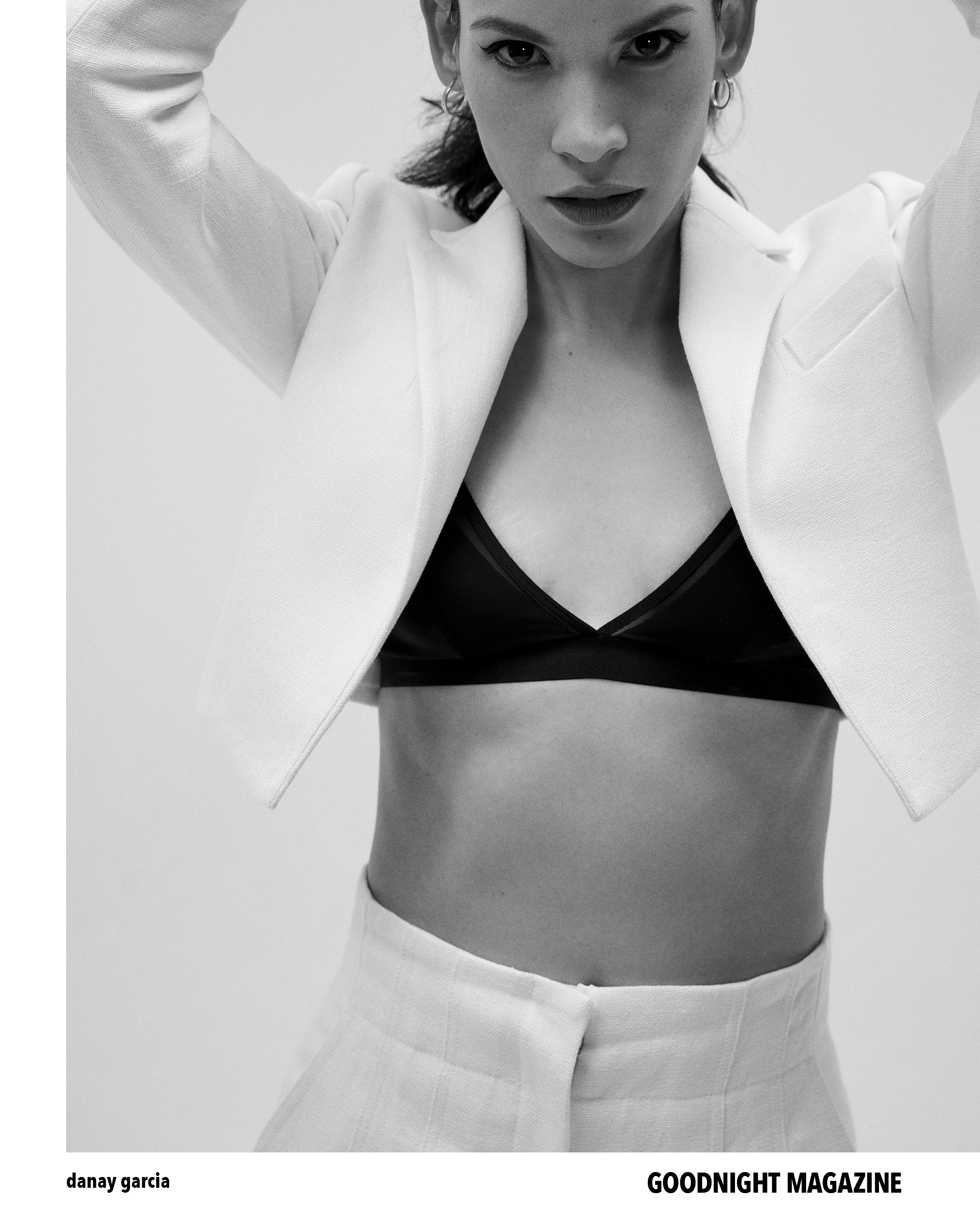
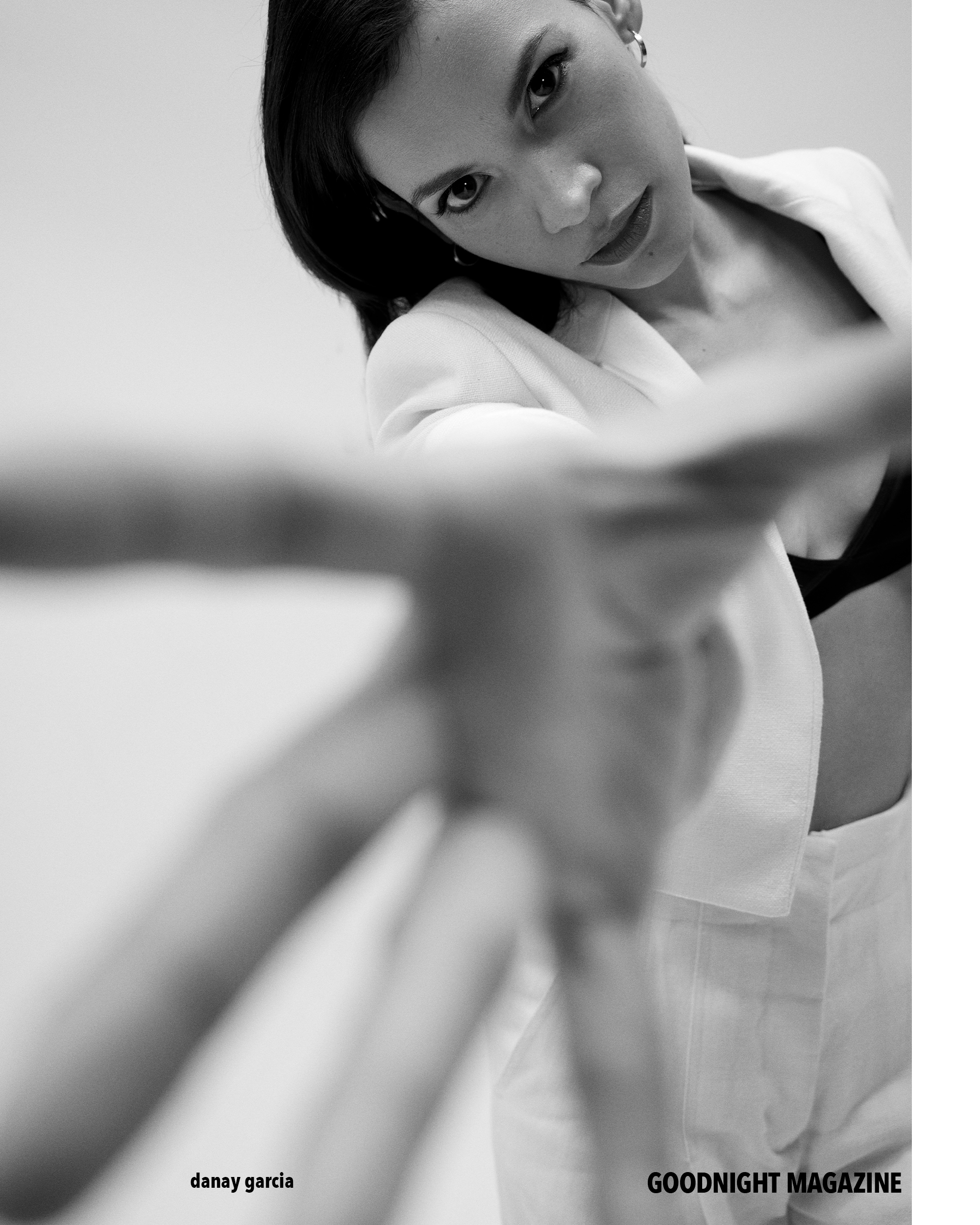
GN: You’ve built a powerful career both in front of and behind the camera, what excites you most about this current chapter of your creative journey?
DG: What excites me the most about this period of my life and career is that I finally understand that being overwhelmed is not the enemy. Earlier in my career, every new experience felt enormous, almost consuming. Now, after years behind and in front of the camera, I still feel the weight of the work, but I understand how to hold it. That changes everything.
I deeply appreciate every department, every person, every quiet contribution that allows a story to exist. I think years in this industry taught me that storytelling is never built alone. And there’s something very moving about reaching a point where you can recognize your position inside that machinery with clarity and gratitude.
GN: Your upcoming series M.I.A with Bill Dubuque is highly anticipated. What drew you to this project, and what can audiences expect from your character?
DG: What drew me to MIA immediately was the scale of the emotional commitment it demanded from me. When I first read the pilot, I was completely pulled into the world Bill Dubuque created — the tension, the emotional depth, the danger living underneath every interaction. But interestingly, I didn’t initially realize I would be playing twins. I found that out once I got the role, and suddenly the entire experience expanded in front of me.
Leah and Carmen are not variations of the same woman. They are two fully lived human beings carrying very different emotional histories, survival instincts, and wounds. And that realization changed everything for me. The level of responsibility felt huge, because I knew there was no version of this where I could protect one character more than the other. They both demanded the same level of truth, intensity, and emotional precision.
And having our showrunner, Karen Campbell, through that journey was incredibly inspiring. From the very beginning to the very end, it truly felt like we were holding hands creatively.
What audiences can expect from this story is a complete emotional roller coaster. You have family, love, power, wounds, trauma, violence, explosions — all living inside the same world at the same time. The series never really lets you breathe in the best way. It’s constantly moving, constantly shifting, constantly pulling the characters deeper into impossible situations.
GN: You’re also starring in Miami Nights alongside Terrence Howard. How does this film differ from your previous work, and what challenged you most about the role?
DG: Miami Night was so much fun. Working alongside Terrence Howard was truly a gift. He’s incredibly present, incredibly precise, and there’s something very fearless about the way he works.
I still remember meeting him on set for our first scene together. I had this little monologue, and from the moment we started, he was completely there with me — building the moment with such generosity. As an actor, that kind of presence elevates you immediately.
What really drew me to the story was its emotional humanity. Beneath everything, it’s a story about PTSD, trauma after war, and the complicated process of returning to society carrying experiences that never really leave you. My character becomes deeply connected to Terrence’s character “David Wolf”, who is this journalist fascinated and emotionally pulled into the lives of these veterans trying to find their place again.
GN: After eight seasons on Fear the Walking Dead, how did it feel to close that chapter and especially stepping into a directing role for such a pivotal episode?
DG: Finishing Fear the Walking Dead after eight seasons honestly feels like one of the greatest accomplishments of my life in television. To be able to carry a character for that many years — through so many emotional, physical, and creative evolutions — was an extraordinary gift. Very few actors get to live with a role long enough to truly grow alongside it, and I never took that for granted.
What moves me the most when I look back is the relationship with the audience. That universe awakened something very deep in people, and the fan base carried us with so much passion and loyalty for years. I’ll always be grateful for that. There’s something incredibly humbling about realizing that these stories became part of people’s lives, their routines, their conversations, even their healing sometimes.
And then stepping into Directing one of the most beautiful episodes centered around Colman Domingo plays “Strand”, honestly felt like the cherry on top of the entire experience. It allowed me to understand television from a completely different perspective. After spending years in front of the camera, suddenly I was responsible for shaping the emotional rhythm of an entire episode. And directing is absolutely something I’m pursuing.
GN: You began your U.S. journey after leaving Cuba in 2003. Looking back, how have those early experiences shaped your resilience and perspective as an artist today?
DG: I actually began my artistic journey in Cuba. Before acting, I spent many years dancing and training in gymnastics, and eventually I found my way into theater, where I immersed myself for two intense and transformative years. That was really the beginning of understanding storytelling not simply as performance, but as discipline, devotion, and human connection.
One of the greatest things I carry with me from home is the profound respect we have for the arts. In Cuba, art is not treated like decoration around life — it is part of survival, part of identity, part of the emotional language of people. Music, dance, theater, storytelling… they become ways of understanding one another and enduring together.
That relationship shaped me deeply.
GN: When the day winds down, what does your nightly routine look like? Is it structured and intentional, or do you let it unfold naturally?
DG: Nighttime is very important to me. I love cooking dinner, even washing the dishes, tidying everything up before going to bed. There’s something about preparing the space at the end of the day that keeps me grounded.
Whether I’m in a hotel room, on location somewhere far from home, or in my own house, I try to create the same feeling — a sense of calm before sleep. It becomes a way of resetting emotionally and mentally before stepping into another day of work, another character, another plan waiting for tomorrow. I think those small rituals matter more than people realize.
GN: Do you find yourself dreaming often, vividly or abstractly? And have your dreams, or even nightmares, ever influenced your creative work?
DG: I know we dream every night. I know the mind is constantly processing, constantly creating images and emotions while we sleep. I just rarely remember my dreams. Every once in a while I’ll wake up with fragments of one — I’m calling everyone saying, “I had a dream last night.” But most of the time, whatever happened there stays somewhere deeper, somewhere I can’t fully reach consciously. What I do feel very connected to is intuition.
I think I move through my work very emotionally and instinctively. I trust feelings a lot. I trust energy, emotional shifts, silences, the things that are difficult to explain logically. And because of that, I do believe my subconscious mind is deeply involved in my creative process, even if I don’t always see it directly.
GN. In a profession that demands emotional depth, how do you mentally and spiritually decompress before going to sleep?
DG: I usually look at my call sheet the night before and really take in what the next day is going to demand from me — whether it’s physically intense, emotionally heavy, technically challenging, or all of it at once. I like preparing myself mentally before I ever arrive on set. So I create a quiet space for that.
I meditate, light a candle — something grounding, calming — and I start visualizing the day ahead. Not in a rigid way, because film and television are so unpredictable, but more as an emotional preparation. I imagine the rhythm of the day, the energy I may need, where I’ll have to protect myself emotionally, where I’ll need to stay open.
It gives me intention before the chaos begins.
GN: If you could step into one of your dreams and live there for a night, what kind of world would it be and what part of yourself do you think it would reveal?
DG: I’ve always loved the idea of traveling through time — going backward, forward, stepping into completely different eras. I think it comes from my fascination with history and civilizations. I’m endlessly curious about where we come from, how people lived, what shaped them, what they feared, what they believed in. Every period in history feels like its own emotional universe.
There’s something so romantic and mysterious to me about existing between eras, carrying pieces of all of them with you.
GN: How many different ways do you say “goodnight,” whether through words, rituals, or quiet moments, and what does each one mean to you?
DG: Saying good night is such an important ritual to me. It feels like a way of acknowledging the life you lived that day — the energy you gave, the emotions you carried, the experiences you moved through — and then gently closing that chapter before beginning again tomorrow in a different way, as a slightly different version of yourself. I think there’s something very human and comforting about that pause.
And when I’m far away from home, which happens often with this career, I usually call my family before going to sleep. We say good night, we talk about our days, the little things that happened, what we’re feeling, what exhausted us, what made us laugh. Those conversations mean so much to me.
It’s not only about ending the day for yourself, but about remaining emotionally present in each other’s lives.
talent : @danaygarcia1 at @independentpublicrelations
photo : jonny marlow @jonnymarlow
hair makeup : @blondiewoodbeauty
eic : kimberly goodnight @mediaplaypr