
adewale akinnuoye-agbaje
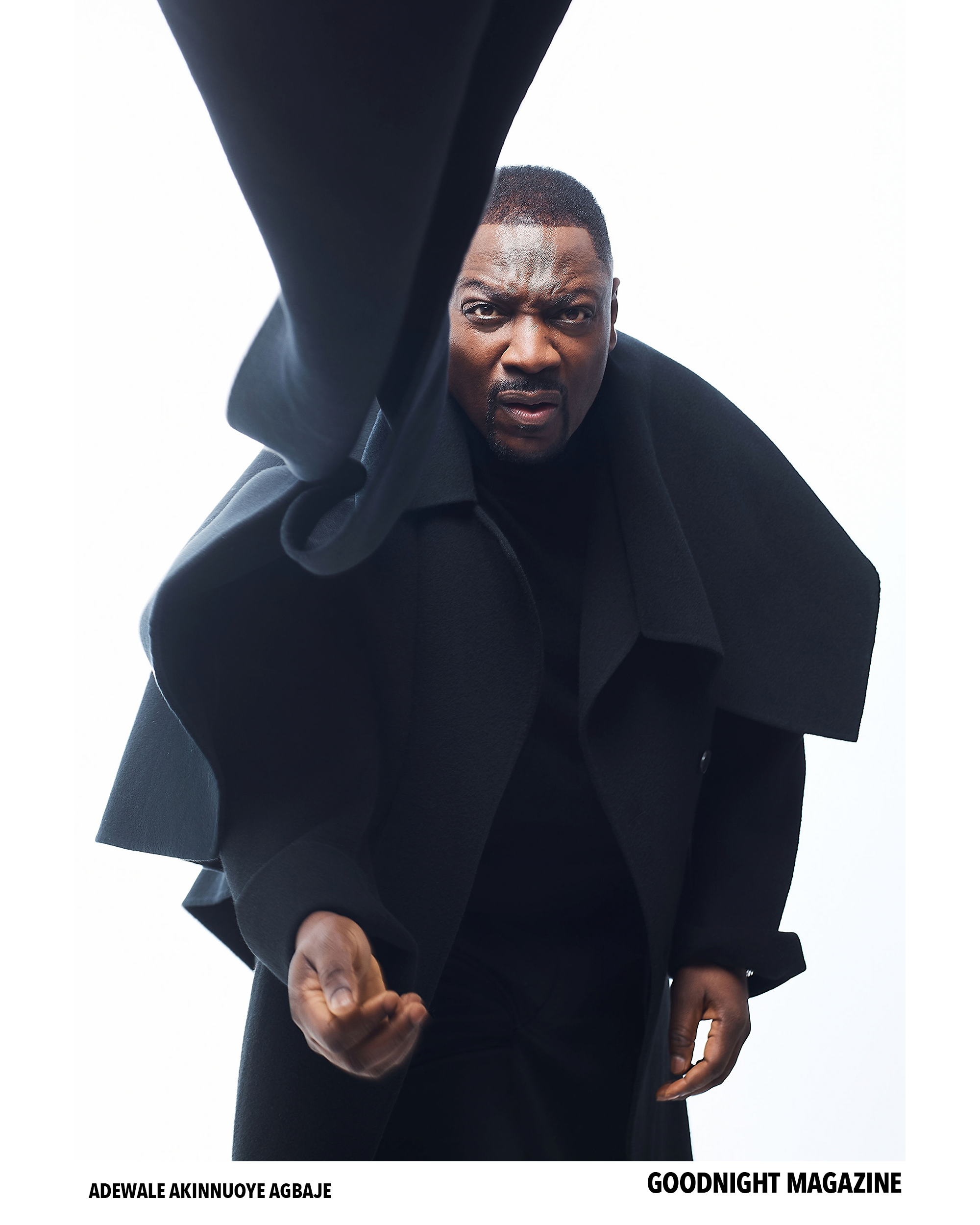
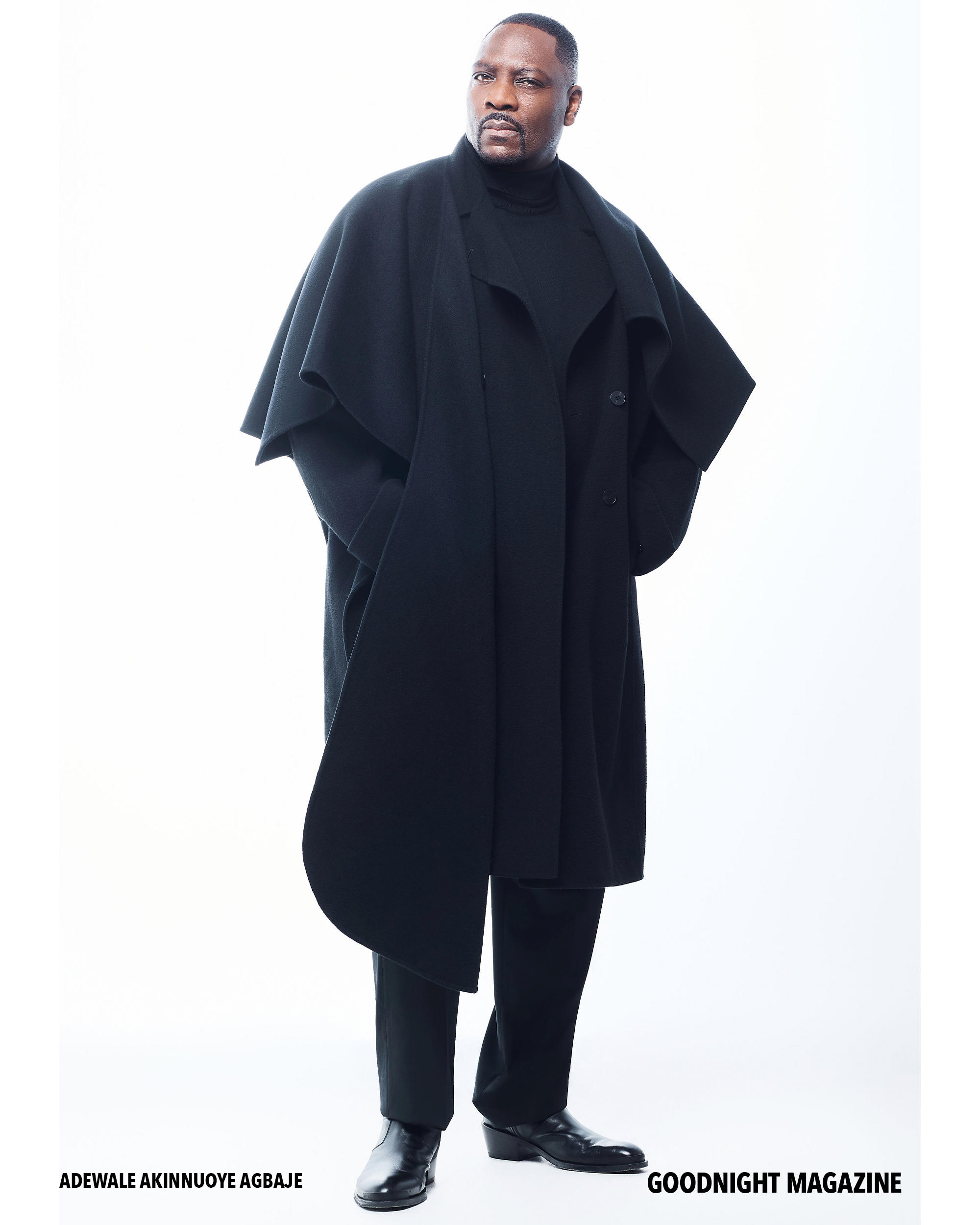
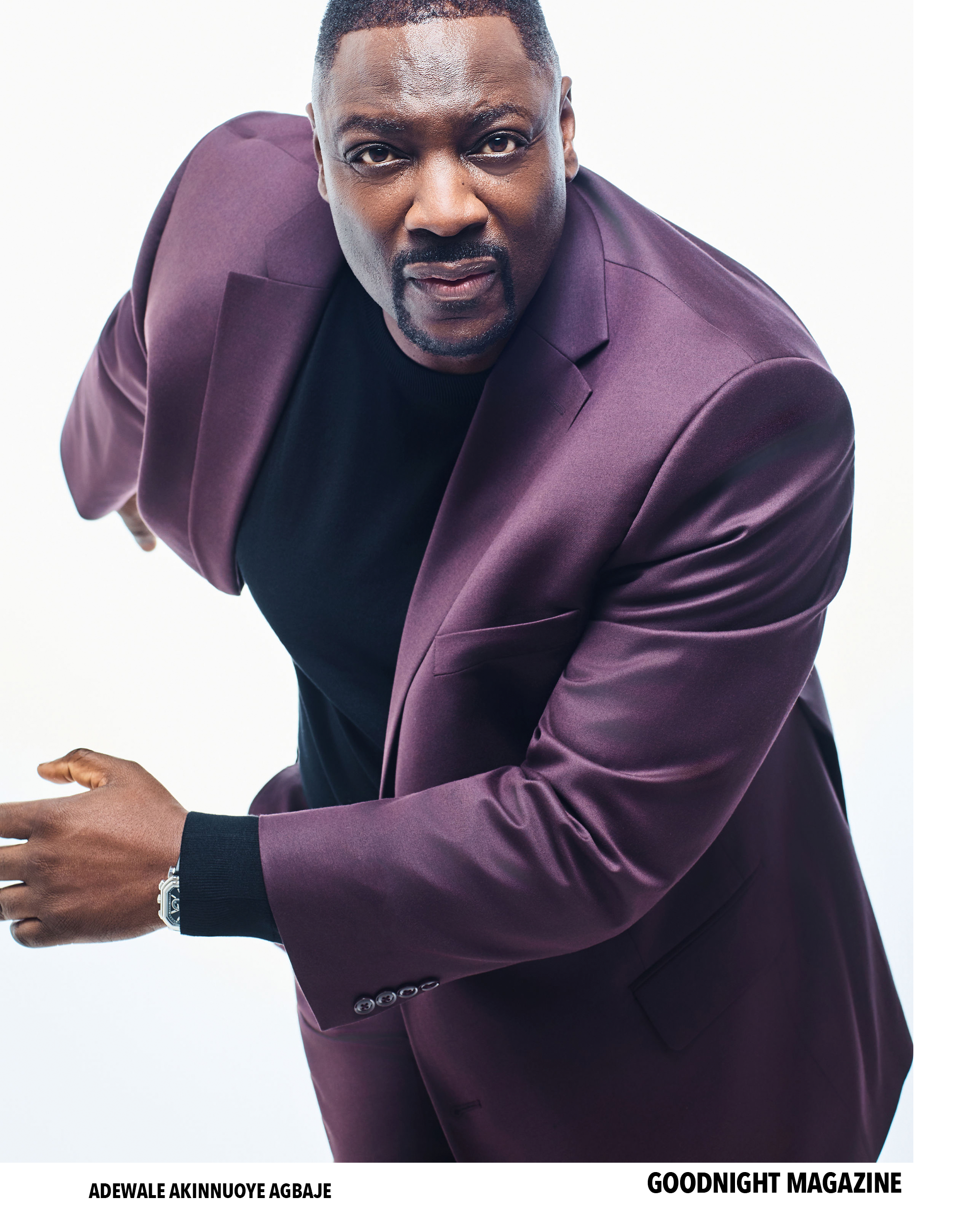
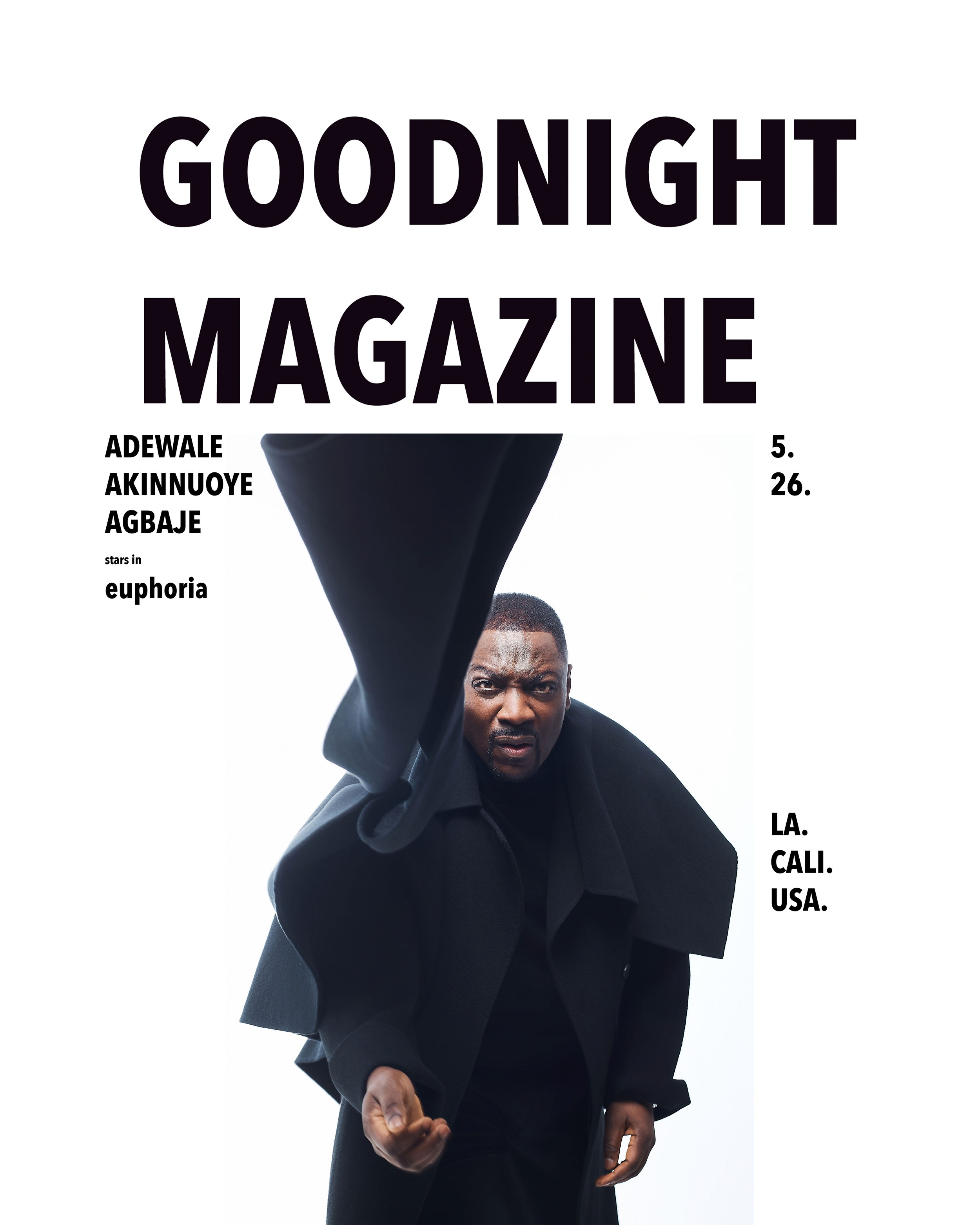
GN: Having navigated an unusually interdisciplinary path from legal scholarship at King’s College London to international modeling in Milan and ultimately to cinema, how have these seemingly divergent worlds informed the intellectual and emotional architecture of your performances?
AA: I don’t see those experiences as separate chapters as much as different ways of studying human behavior. Law taught mediscipline, focus and analytical skills as well as the ability to understand motivation, consequence, and the stories people tell to justify their actions. Modeling gave me an acute sense of style and appreciation for aesthetics and exposed me to cultures, languages, and environments far beyond my own experience. Acting became the place where all of that converged. Every role asks you to examine what drives a person, what they’re hiding, what they fear, and what they love. Those earlier experiences gave me different lenses through which to view humanity, and I draw on them constantly in my work.
GN: Across projects such as Congo, The Mummy Returns, and Oz, your characters often embody power, displacement, or psychological endurance. What recurring human questions continue to draw you toward these roles?
AA: I’m fascinated by how people respond when they’re pushed to their limits. Power, displacement, survival, these are universal experiences in different forms. Whether a character is navigating a prison, a battlefield, or a personal crisis, the question is often the same: who are you when the things that define you are stripped away? I think audiences connect with that because we’ve all faced moments that test our sense of self. I also like taking roles that challenge me to grow as an artist and as a person.
GN: You are fluent in multiple languages, including Yoruba, Swahili, Italian, and English. Do you believe multilingualism has altered the way you interpret silence, conflict, or emotional nuance within performance itself?
AA: Absolutely. Language is more than vocabulary, it’s rhythm, perspective, and culture. Different languages express emotion differently, and some feelings are easier to articulate in one language than another. That has made me more attentive to what isn’t being said. Silence can communicate grief, love, tension, or pride more powerfully than dialogue. Being multilingual has helped me appreciate the varying, rhythms, frequencies and vibrations between words and in so doing allow me to give off more textured and complex performance.
GN: Many actors speak of transformation as external, yet your work frequently suggests an internal excavation of identity and memory. When approaching a role, are you more interested in understanding a character’s psychology, their social context, or the contradictions they attempt to conceal?
AA: For me, those elements are inseparable. Psychology doesn’t exist in a vacuum. A person’s environment, history, culture, and relationships shape who they become. What interests me most are contradictions because that’s where truth often lives. People are rarely one thing. It’s often the grey area, the middle way where truth and greatness reside. We can be brave and afraid, compassionate and flawed, confident and insecure all at once. Discovering those tensions is usually where the most interesting work begins.
GN: Having worked across Hollywood blockbusters, independent cinema, and prestige television, how have you observed the industry’s understanding of African and diasporic narratives evolve over the course of your career?
AA: There has been definitely progress. When I began, many stories involving Africa or the diaspora were viewed through a very limited lens. Today there is a greater appetite for specificity and authenticity. The advent of Digital media has to a large extent made the traditional Hollywood gatekeepers all but extinct and in so doing has allowed for a wider and more diverse group of story tellers to share their perspectives with the world. Audiences want complexity, not stereotypes. There is still work to do, but I’m encouraged by the number of storytellers who are telling their own stories and bringing perspectives that were often overlooked in the past. It is one of the reasons I became a filmmaker myself, to write and direct stories from my own cultural perspective , that not otherwise be told unless I chose to tell them myself.
GN: Your career has consistently resisted categorization, moving between intellectual rigor, physical intensity, and deeply emotional storytelling. Was that versatility a deliberate artistic philosophy, or did it emerge organically?
AA: It was always deliberate. I have always wanted to challenge myself and explore different genres, mediums and characters. For me the beauty of acting is that it affords you the opportunity to disappear from who you are for a moment and go on an adventure through somebody else’s life. I’ve always been curious, and curiosity naturally leads you toward different kinds of work. At the same time, I never wanted to become confined by expectations. If a role challenges me intellectually, emotionally, or physically and has a substantive message that resonates, that’s usually a good sign that it’s worth pursuing.
GN: As contemporary audiences increasingly seek stories rooted in authenticity and cultural specificity, what kinds of narratives or creative collaborations most excite you at this stage of your career?
AA: I’m drawn to stories that reveal something truthful about people while remaining deeply rooted in a particular culture or community. The more specific a story is, the more universal it often becomes. I’m especially excited by collaborations with filmmakers and writers who are willing to take risks, challenge assumptions, and explore perspectives that haven’t been fully represented on screen.
GN: Looking toward your upcoming projects, are there themes, historical figures, or unexplored emotional territories you feel particularly compelled to investigate now, perhaps subjects that resonate more profoundly with you today than they would have earlier in your life?
AA: As I’ve gotten older, I’m increasingly interested in legacy, reconciliation, and the passage of time. I’m drawn to stories about people confronting the choices they’ve made and the impact they’ve had on others. There are many remarkable historical figures, people like Desmond Tutu , Marcus Garvey, Louis Armstrong and Jack Johnson whose stories deserve greater attention, but more broadly I’m interested in exploring the quieter dimensions of truth, wisdom , and emotional vulnerability.
GN: After decades of working across continents, industries, and artistic disciplines, what do you ultimately hope your body of work communicates, not merely about cinema, but about resilience, identity, and the complexity of human reinvention?
AA: I hope it reflects the idea that human beings are far more complex than the labels we assign to them. Life is a continuous process of reinvention. We all evolve through adversity, experience, and self-discovery. If my work encourages people to see themselves and others with greater empathy and understanding, then I would consider that meaningful.
But at the very least I would hope that I have touched hearts. the word ‘Art’ is the other half of the word ‘Heart.’ That is not a coincidence. I believe we are simply engaged in a heart-to-heart connection through our creative expression. So, if I have managed to touch and connect with the hearts of people and moved them to a better place in some way through my creative expression then I will be happy. I am a ‘heartist’ and I just want to entertain and make people happy.
GN: Many actors talk about dreams shaping their ambitions. At this point in your journey, what dream are you still chasing, and what keeps you motivated during uncertain moments?
AA: The dream has evolved over time. Early on, it was about opportunity and proving myself. Today, it’s about creating work that has lasting meaning. I’m motivated by the possibility of growth, there is always more to learn, more to understand, and more stories to tell. During uncertain moments, I remind myself why I started: a genuine love for storytelling and a belief in its power to connect people.
During uncertain moments, I remind myself why I started: a genuine love for storytelling and a belief in its power to connect people. At this stage of my life, one of my greatest aspirations is to create work that is respected, not just broadly, but within my own community and among the people whose stories and experiences helped shape me.
GN: As a final question, what does your personal nighttime routine look like when you truly want to guarantee yourself a good night?
AA: My favourite time of day is often the time I spend writing, whether it's working on a book, a screenplay, or developing ideas for television. Writing calms me. It reconnects me with my purpose and reminds me why I became an artist in the first place.
There are only twenty-four hours in a day, and it's what you choose to do with them that matters. If I go too long without writing, I feel like I've missed out and lost touch with an important part of myself.
I'm also a Buddhist and I chant every morning and every evening, sandwiching my day in that mystic energy. That practice helps ground me, creates a sense of balance, and allows me to end the day with clarity and gratitude and sense of peace. When I combine those moments of reflection and creativity, sleep usually takes care of itself.
photographer: rowan daly
stylist is jason rambert
eic & publisher : kimberly goodnight